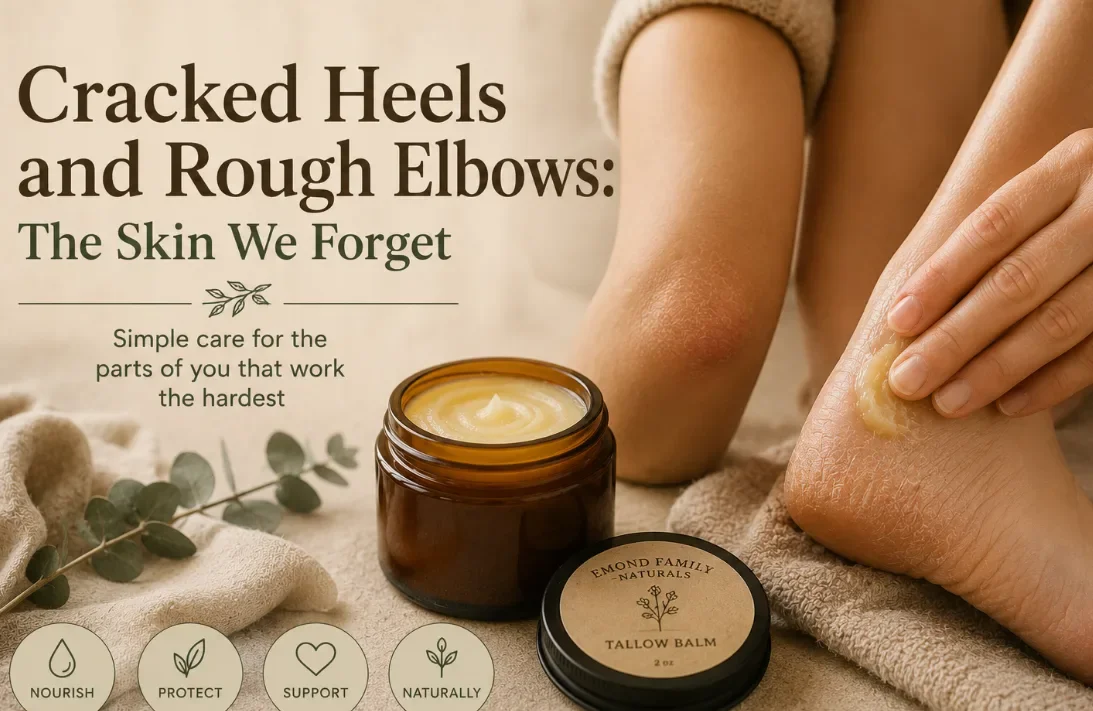
Cracked Heels and Rough Elbows: The Skin We Forget
We take care of our face, but what about our heels and elbows? Here’s why those spots get rough first, what’s actually happening underneath, and a few simple habits that help.
The Skin We Forget About
Most of us have a skincare routine for our face. Maybe even our hands, since we wash them a dozen times a day and notice when they get dry. But there's a whole map of skin most of us never think about until it starts cracking, catching on socks, or looking rough in sandals — heels, elbows, knees, the backs of hands.
It's not that this skin needs less care. It's just easier to forget, because we don't see it in the mirror the same way we see our face.
Why These Spots Get Rough First
Heels, elbows, and knees all have something in common: they're high-friction areas with fewer oil glands than the rest of your body. Your face and scalp are covered in sebaceous glands producing natural oil all day long. Your heels and elbows barely have any. Add in constant friction from shoes, sleeves, and leaning on desks, and you've got skin that dries out faster and repairs itself slower than anywhere else.
That's why cracked heels and ashy elbows aren't really a summer problem or a winter problem — they're a year-round problem that just gets more noticeable when the weather changes or when sandals leave nowhere to hide.
What's Actually Happening Under the Surface
When skin doesn't have enough natural oil to hold onto moisture, the outer layer gets thick, dry, and eventually cracks. Heels are the most dramatic example — the skin there is already thicker to begin with, so when it dries out, it doesn't just flake, it splits. Elbows and knees do something similar, just less painfully. They get rough, dull, and sometimes a little gray-looking because dead skin cells build up faster than they shed.
It's a Barrier Problem, Not a "Dirty Skin" Problem
A lot of people reach for exfoliating scrubs the moment they notice rough patches, thinking the problem is buildup. Scrubbing can help smooth things out temporarily, but if you're not also replacing the oils that skin is missing, you're just sanding down a surface that's going to dry out again just as fast. The real fix is giving that skin something to hold onto — not just buffing it away.
Simple Ways to Support These Spots
You don't need a separate product for every part of your body. A few small habits go a long way:
Apply balm right after a shower or bath, while skin is still a little damp. This helps lock in moisture instead of fighting dry skin from scratch.
Pay extra attention to heels and elbows at night, since you're not putting weight or friction on them while you sleep — give the balm time to actually absorb.
Keep a small jar somewhere you'll actually use it, like next to your socks or on your nightstand, so it's not an extra step you have to remember.
Consistency Matters More Than Quantity
You don't need to slather on a thick layer once a week and hope for the best. A thin layer, applied consistently, does more for rough skin than an occasional heavy application. Skin barriers rebuild gradually — a little bit of support most days beats a lot of effort every once in a while.
Where Tallow Fits In
This is exactly the kind of skin tallow was made for. Tallow's fatty acid profile is close to what your own skin produces naturally, which means it doesn't just sit on the surface — it actually gets absorbed and put to use. For thick, dry, high-friction areas like heels and elbows, that matters more than fragrance or texture.
Our tallow balms are made with grass-fed beef tallow, beeswax, raw honey, vitamin E, and aloe — simple ingredients meant to support skin that works hard and doesn't always get noticed. A small amount rubbed into heels, elbows, or knees at night is an easy way to give that forgotten skin what it actually needs, without adding another step you'll skip after a week.
Sometimes the best skincare isn't a new routine. It's just remembering the parts of yourself you've been walking past.
The Skin You Use the Most: Why Hands Deserve More Care
Your hands do more work than almost any other part of your skin, but they’re usually the last thing people think to care for. Here’s why they dry out so fast, and a simple habit that makes a real difference.
Think about everything your hands do in a single day. Dishes, laundry, gardening, gripping a steering wheel, holding a kid's hand across a parking lot. They're constantly working, constantly being washed, and constantly exposed to the elements — yet when people think about skincare, hands are usually an afterthought, if they're thought about at all.
That's a little backwards when you consider how much wear and tear this skin actually takes on.
Why Hands Dry Out Faster Than You'd Think
Hands go through more than almost any other part of your skin, and they're not especially well equipped for it.
Constant Washing Strips Natural Oils
Every time you wash your hands, you're not just removing dirt and germs — you're also washing away the natural oils that keep skin soft and protected. Do that a dozen times a day, especially with hot water and soap, and your hands can end up drier than skin that barely gets touched. It's one of the most common causes of rough, cracked hands, and most people never connect the dots.
Thin Skin, Big Workload
The skin on the backs of your hands is thinner than most people realize, with very little natural padding. Add in constant exposure to weather, cleaning products, and friction from everyday tasks, and it's no wonder hands often show dryness before anywhere else on the body. For many people, hands are actually one of the first places visible signs of dehydration and roughness show up.
Small Habits That Make a Real Difference
You don't need a separate hand care routine with its own set of products. You just need to treat your hands like the hardworking part of your body they are.
Moisturize Right After Washing
The best time to apply something to your hands is right after they've been washed and are still slightly damp. That's when skin is most open to absorbing moisture, and it helps replace some of what the washing just stripped away. Keeping a small tin of balm near the sink or in your bag makes this an easy habit to build, rather than something you have to remember to go find.
Give Nighttime Some Attention
Hands work all day, so nighttime is when they get a real chance to recover. A simple habit of massaging a little balm into your hands before bed — cuticles included — gives your skin uninterrupted time to soak it in without immediately being washed off again. Over a few weeks, this alone can make a noticeable difference in how your hands look and feel.
A Simple Hand Care Habit to Start Tonight
If you want somewhere easy to begin, try this:
1. Keep a small container of balm within reach of your sink, whether that's the kitchen or the bathroom.
2. After washing your hands, while they're still a little damp, work a small amount into your skin, paying extra attention to knuckles and cuticles.
3. Do the same again before bed, when your hands have a stretch of time to actually absorb it.
It's a small habit, but it adds up. Hands that get consistent care hold up noticeably better through cold weather, constant handwashing, and everyday work.
Where Emond Family Naturals Fits In
Hands are actually one of the most natural places to reach for a tallow balm, even though most people think of it as a face product first. Because tallow is so similar in structure to what your own skin produces, it absorbs well without leaving hands feeling greasy or slick — which matters when you're about to go back to cooking dinner or helping with homework. Any of our three balms works well here, but a lot of our families keep the Orange Citrus by the kitchen sink for a little brightness during the day and switch to Lavender Citrus for the nighttime routine.
Hands do a lot of quiet work for you. A little care in return doesn't take much — just a habit worth starting.
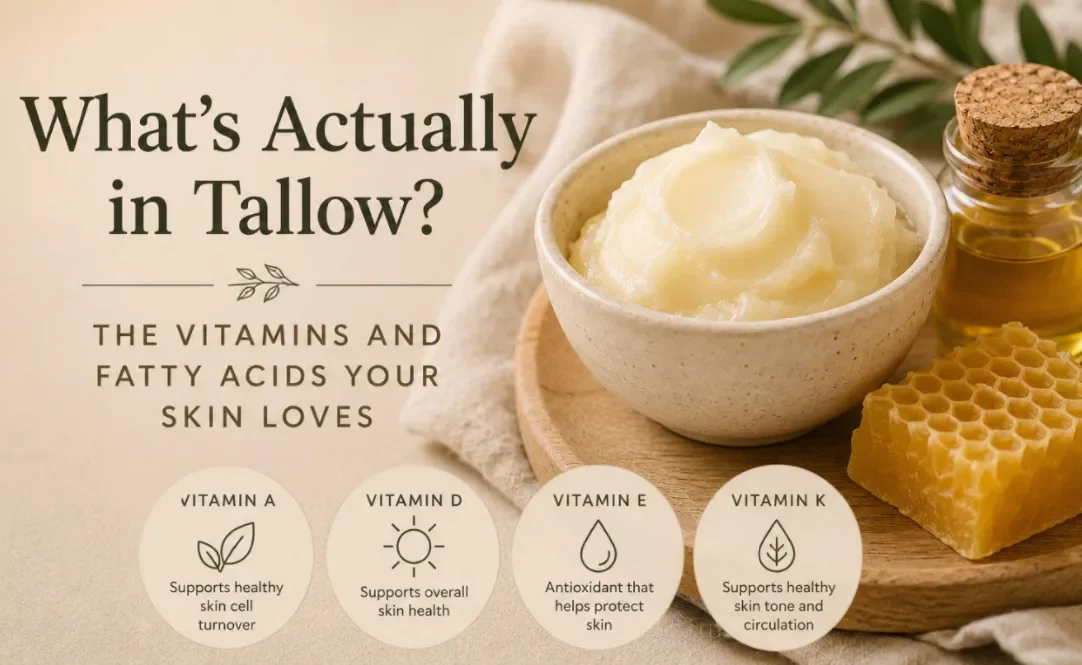
What’s Actually in Tallow? The Vitamins and Fatty Acids Your Skin Loves
Most of us learned that better skincare means more ingredients. Tallow tells a different story — one packed with fatty acids and vitamins A, D, E, and K that your skin already recognizes. Here’s what’s actually inside it, and why that matters.
Most of us grew up thinking that "good skincare" meant a long list of ingredients with fancy scientific names. But the more we've learned about what skin actually needs, the more we've come back to something surprisingly simple: the same kinds of fats your body already recognizes.
Tallow — rendered beef fat, traditionally sourced from grass-fed cattle — has a remarkably similar composition to your skin's own natural oils. And when you look at what's inside it, that starts to make a lot of sense.
The Fat Profile That Feels Familiar to Your Skin
Your skin produces something called sebum — a natural oil that keeps your skin moisturized and protected. Sebum is made up of a mix of fatty acids, and here's what's interesting: tallow has a very similar fatty acid profile.
Oleic Acid
This is a monounsaturated fatty acid that helps soften and condition skin. It's also one of the dominant fatty acids in sebum, which means your skin already knows what to do with it.
Palmitic Acid
A saturated fat that helps provide structure and supports the skin barrier. It's naturally produced by your own skin and plays a role in keeping moisture from escaping.
Stearic Acid
Another saturated fatty acid that supports skin flexibility and provides a soft, smooth feel. Because these fats are so similar to what your skin naturally makes, tallow tends to absorb well — without that heavy, greasy feeling you might expect.
The Fat-Soluble Vitamins
Here's where it gets really interesting. Grass-fed beef tallow isn't just fat — it's fat that carries fat-soluble vitamins. These are vitamins that can only be stored and transported in fat, which means they're delivered directly into the skin when you apply a tallow-based balm.
Vitamin A
Supports healthy skin cell turnover. Your skin naturally goes through cycles of renewal, and vitamin A plays a role in keeping that process moving smoothly. It's one of the most recognized vitamins when it comes to skin health, and tallow is a natural source of it.
Vitamin D
Supports overall skin health and is naturally produced by your skin when exposed to sunlight. Including it in a topical product is one way to give your skin a little extra support — especially in winter months when sun exposure drops off significantly.
Vitamin E
A well-known antioxidant that helps protect skin from everyday environmental exposure. We also add extra vitamin E oil to our balms because it's such a natural complement to what's already in the tallow — and because it helps the balm stay fresh longer, too.
Vitamin K
Supports healthy skin tone and circulation. It's less talked about in mainstream skincare, but it's naturally present in quality grass-fed tallow and part of what makes a well-sourced product genuinely nourishing.
Why Grass-Fed Matters
Not all tallow is the same. Tallow from grass-fed cattle tends to have a better fatty acid profile and higher concentrations of these fat-soluble vitamins compared to tallow from conventionally raised animals.
That's why we use American-sourced, 100% grass-fed beef tallow in our balms. It's not just a detail we're proud of — it actually affects what goes on your skin.
Simple Doesn't Mean Simplistic
Choosing tallow isn't about ignoring what we know about skin. It's the opposite.
It's choosing an ingredient whose composition genuinely mirrors your skin's natural oils — one that delivers real nourishment (fatty acids, fat-soluble vitamins) in a form your skin can absorb and actually use.
A lot of modern products use synthetic versions of these same compounds: synthetic vitamin E, lab-created emollients that mimic natural oils. There's nothing wrong with understanding the science behind any of it. But there's something honest and grounded about going back to a source that's been trusted for centuries.
What This Looks Like in Our Balms
At Emond Family Naturals, everything in our tallow balms starts with this foundation. Grass-fed beef tallow provides the base, along with yellow beeswax for texture and protection, raw honey for gentle moisture support, and vitamin E oil for an extra layer of care.
Whether you reach for our uplifting Orange Citrus in the morning, the calming Lavender Citrus before bed, or the cozy Salted Caramel on dry winter days — you're getting the same thoughtful, honest base your skin will recognize.
Simple ingredients. Real nourishment. Made with care.
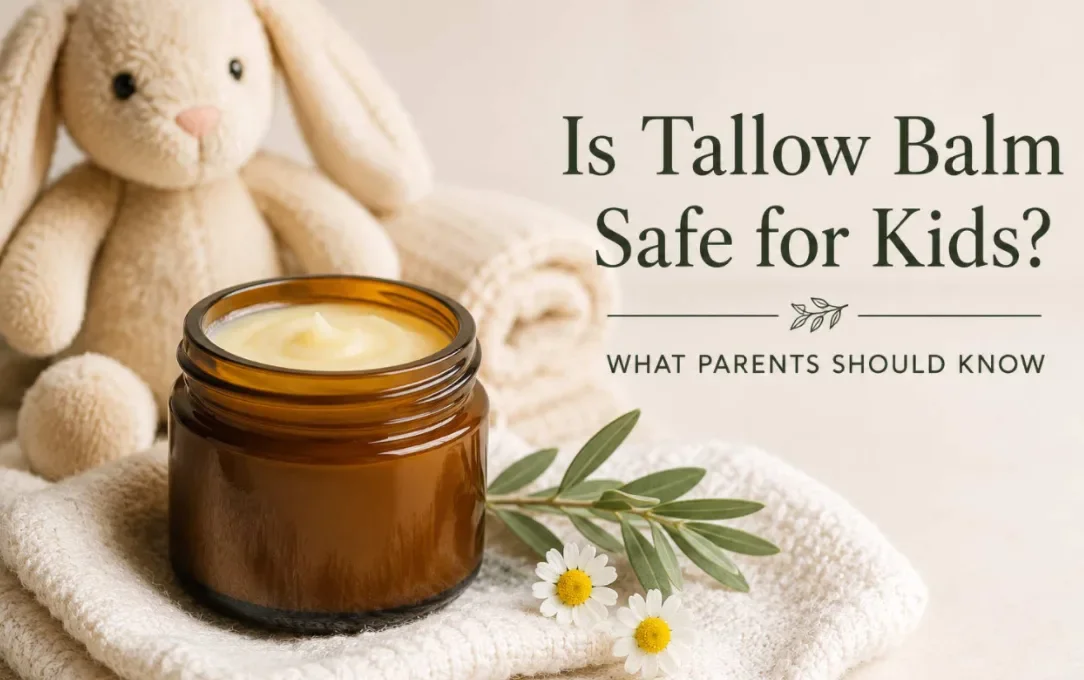
Is Tallow Balm Safe for Kids? What Parents Should Know
Wondering if tallow balm is gentle enough for your kids? Here’s what makes tallow biocompatible with young skin, what to watch for, and why one simple balm can work for the whole family.
If you're a parent, you already know that what goes on your kid's skin matters just as much as what goes in their bodies. Kids' skin is thinner, more reactive, and still developing its own natural barrier — which means a lot of parents start paying closer attention to ingredient lists the moment they have a child to take care of.
We get asked fairly often whether our tallow balms are okay to use on children. The short answer is yes, for most families — but let's walk through why, and what to actually look for.
Why Simple Ingredients Matter More for Kids
Children's skin loses moisture faster than adult skin and has a thinner outer layer, which makes it more vulnerable to irritation from fragrances, preservatives, and synthetic additives. This is part of why pediatricians and dermatologists often recommend simple, short ingredient lists for kids rather than products packed with extras.
Tallow balm tends to fit that recommendation naturally, simply because it doesn't need a long ingredient list to work. Ours contains beef tallow, beeswax, raw honey, vitamin E oil, aloe, and essential oils — nothing your child's skin has to work hard to process or recognize.
What Makes Tallow Biocompatible with Skin
One reason tallow works well across age groups is that its fatty acid profile is similar to the fats naturally found in human sebum — the oil our skin already produces. That similarity is sometimes called biocompatibility, and it's part of why tallow tends to absorb well without feeling foreign to the skin, whether that skin belongs to a toddler or a grandparent.
Tallow also naturally contains vitamins A, D, E, and K, which support skin health in small, steady ways rather than through anything intense or fast-acting. That gentleness is exactly what makes it a reasonable option for younger, more sensitive skin.
A Few Things Parents Should Still Check
Even with simple ingredients, every child's skin is different, and a few precautions are worth keeping in mind.
Essential oils deserve a closer look. Essential oils are concentrated, and some are better suited to adult skin than a baby's. If you're using a balm on an infant or very young toddler, it's worth choosing a fragrance-free option or doing a small patch test first — apply a small amount to the inside of the wrist or elbow and wait 24 hours.
Honey-based products and infants. Raw honey is a wonderful skin ingredient, but as a general food safety guideline, honey isn't given internally to babies under one year old due to botulism risk. Topical use is a different category and considered safe by most pediatric sources, but it's a fair question to ask your child's doctor if you're ever unsure.
Watch for reactions, not just ingredients. Even gentle, natural products can occasionally cause sensitivity in a specific child. If you notice redness, itching, or irritation after first use, discontinue and consult your pediatrician.
Why Tallow Balm Works for the Whole Family
One of the things we hear most from families who use our balms is how nice it is to have one product that works for everyone in the house — instead of a different lotion for each person's "skin type." A simple, well-made tallow balm can support dry elbows on a teenager, windburned cheeks on a toddler, and rough hands on a parent, all from the same jar.
That's part of why we keep our ingredient list short and recognizable. We're not trying to formulate something different for every age group. We're trying to make something honest enough that it works across all of them.
Bringing It Back to the Family Table
Skincare for kids doesn't need to be complicated, and it definitely doesn't need a separate aisle of "gentle" products marked up for the word "baby" on the label. What it needs is real, simple ingredients that respect how young skin works.
That's the philosophy behind our Lavender Citrus Tallow Balm in particular — it's calming, gentle, and a favorite for bedtime routines in families with little ones. Like all our balms, it's made with the same handful of trusted ingredients: tallow, beeswax, raw honey, vitamin E, aloe, and essential oils, nothing more than what skin actually needs to feel supported and cared for, at any age.
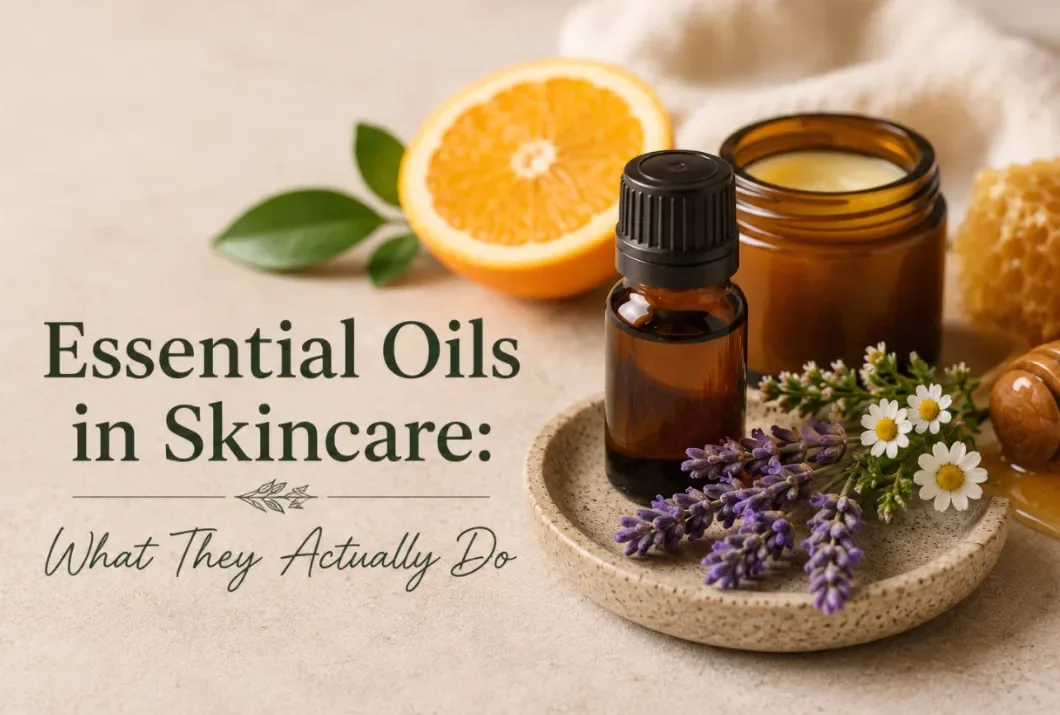
Essential Oils in Skincare: What They Actually Do
Essential oils aren’t magic, but they’re not just empty hype either. Here’s an honest look at what they actually do in a tallow balm, and why a little goes a long way.
When people see "essential oil" on a label, they tend to land in one of two camps. Either it sounds like the most natural thing in the world, or it sounds like a buzzword stretched a little too far. The truth sits in between — essential oils aren't magic, but they're not just nice smells either. They're doing real, modest work, and it helps to know what that work actually is.
What an Essential Oil Actually Is
An essential oil is simply the concentrated, aromatic part of a plant — extracted from flowers, peels, leaves, or wood, usually through steam or pressing. When you smell orange peel or lavender and notice it's strong and distinct, that's the essential oil you're picking up on. Nothing synthetic, nothing engineered. Just the plant's natural oils pulled out and concentrated.
That's a meaningfully different thing than artificial fragrance, which is built in a lab to mimic a smell without any of the plant behind it. Fragrance is designed purely for scent. Essential oils carry the actual chemistry of the plant they came from, which is why their effects go a little further than just smelling nice.
What They Actually Do (and Don't)
Here's where it's worth being honest: essential oils are not going to fix your skin or change your life. What they can do is support a gentle, pleasant experience while adding a few real, mild properties of their own.
Citrus oils, like orange, tend to feel bright and energizing — a lot of people genuinely do reach for citrus scents in the morning because they feel like a lift. Lavender is the opposite story. It's one of the most studied calming scents out there, which is exactly why it shows up in bedtime products so often. These aren't dramatic transformations. They're small, real effects that pair naturally with how and when you use a product.
Beyond scent, some essential oils bring along mild properties of their own, depending on the plant. But the honest version of this story is that essential oils in a balm are a supporting player, not the main event. The base of the product — what's actually moisturizing and nourishing your skin — is doing the heavy lifting. The essential oils are there to make the experience feel right.
Why Less Is More Here
A little essential oil goes a long way, and that's a good thing. Concentrated plant oils are potent, so a well-made product uses just enough to bring scent and a touch of character, properly diluted into a nourishing base, never enough to overwhelm or irritate.
This is part of why we'd rather use two or three essential oils we trust than a long list of ones that just sound impressive on a label. Simpler formulas are easier to understand, easier to trust, and easier on sensitive skin. If you can't picture what an ingredient actually is or where it came from, that's usually a sign it doesn't need to be there.
How We Use Them
We lean on essential oils for exactly the reason described above: to give each balm its own personality without losing sight of what the product is actually for. Our Orange Citrus Tallow Balm uses real citrus oil to bring a bright, wake-up kind of scent — it's the one a lot of people reach for in the morning. Our Lavender Citrus Tallow Balm pairs lavender's calming reputation with a soft citrus note, which makes it a natural fit for sensitive skin and bedtime use.
In both cases, the essential oils are riding along on top of the same simple base: grass-fed beef tallow, beeswax, raw honey, vitamin E oil, and aloe. That base is where the actual nourishing happens. The oils just make the experience feel intentional — a small, honest detail rather than a marketing flourish.
The Bigger Point
Essential oils don't need to be oversold to be worth using. They're a plant doing what a plant does — offering scent and a few mild, real properties, nothing more dramatic than that. Used thoughtfully and in the right amount, they can make a simple, nourishing product feel a little more like itself, whether that's bright and citrusy for the morning or calm and soft for the end of the day.
That's really all we're going for — a balm that smells like something real, made from things you can actually picture, doing a job that doesn't need exaggeration to be worth your trust.
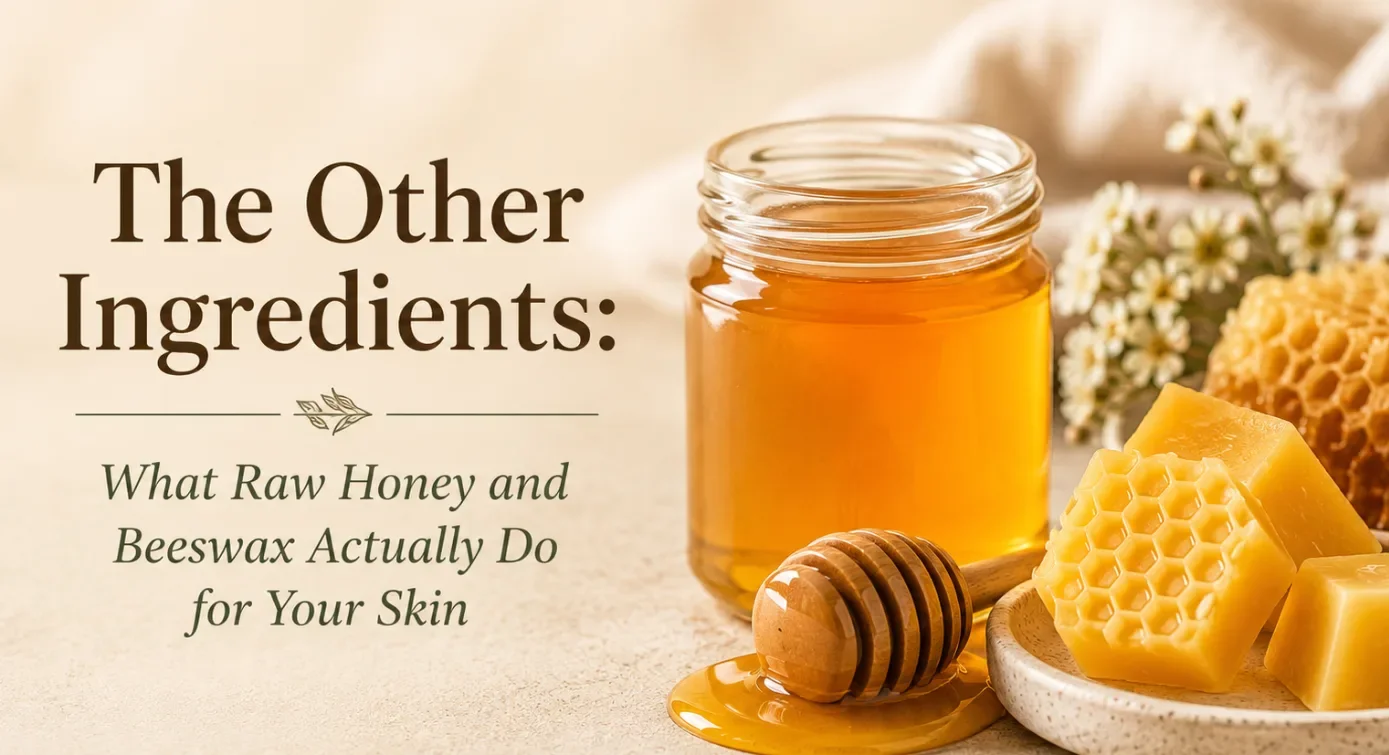
The Other Ingredients: What Raw Honey and Beeswax Actually Do for Your Skin
Most people ask us about tallow — and we love talking about it. But the other ingredients in our balms do real work too. Here’s a closer look at raw honey and beeswax, and why we wouldn’t make our balm without them.
When people first hear about our tallow balm, the questions are usually about the tallow. What is it? Where does it come from? Why would you put beef fat on your face?
We get it. Tallow is the unusual one. It's the ingredient that makes people do a double take, and we're happy to talk about it.
But tallow doesn't work alone. Every jar of Emond Family Naturals balm also contains raw honey, yellow beeswax, vitamin E oil, and aloe — and each one is in there for a reason. Today we want to give raw honey and beeswax their moment, because these two ingredients do more than most people realize.
What Raw Honey Does
Honey has been used on skin for a very long time — and it's not just because it's natural. Honey is a humectant, which means it draws moisture from the environment and holds it against your skin. That's different from an oil or fat, which seals moisture in. Honey actively pulls it toward you.
Raw honey (as opposed to processed honey) also retains its naturally occurring enzymes and trace minerals. It's gentle, and it works well alongside other nourishing ingredients without overwhelming them.
For people with sensitive or reactive skin, honey is often well-tolerated because it's so mild. It softens without heaviness, and it layers seamlessly with tallow's richer texture.
Why "Raw" Matters
Most grocery store honey has been heated and filtered, which strips out some of the naturally beneficial compounds. Raw honey is minimally processed, so what you're putting on your skin is closer to what you'd find straight from the hive. We use raw honey in our balms for exactly that reason — not for the label, but because it makes a difference.
What Beeswax Does
Beeswax plays a different role. Where tallow absorbs and nourishes, and honey draws in moisture, beeswax creates a light protective layer on top. Think of it like a soft seal — it helps slow down moisture loss without completely blocking your skin from breathing.
This matters more than it might sound. A product that just sits on the surface of your skin and traps everything underneath isn't actually doing your skin any favors. Beeswax is semi-occlusive, meaning it protects without fully closing off air exchange. Your skin can still function the way it's supposed to.
Beeswax also gives our balm its texture — that smooth, slightly firm consistency that makes it easy to apply without feeling like you're slathering on a liquid oil. It holds everything together and gives the product a stable, reliable feel year-round.
A Note on Yellow Beeswax
We specifically use yellow beeswax, which is less refined than the white version. White beeswax has been bleached and filtered, which changes its composition. Yellow beeswax keeps more of its natural properties intact. It's one of those small choices that matters to us, even if nobody notices it on the outside of the jar.
How These Ingredients Work Together
Tallow, raw honey, and beeswax each do something different — and that's the point. Tallow absorbs and nourishes deeply. Honey draws moisture in and keeps skin comfortable. Beeswax locks everything in place and protects the surface.
When you layer all three together, you get something that works on multiple levels at once without needing a long list of synthetic additives to fill the gaps. Simple ingredients, doing what they naturally do well.
We also include vitamin E oil and aloe in our formula — both supporting the skin in their own right — but that's a conversation for another day.
The Bigger Idea
We don't use raw honey and beeswax because they're trending or because they look good on a label. We use them because they make the balm work better, and because they fit with how we think about skincare: keep it simple, use things your body recognizes, and trust the basics.
If you've been using our Orange Citrus, Lavender Citrus, or Salted Caramel tallow balms, now you know a little more about what's actually doing the work in every jar. Next time you smooth it on, those ingredients are all showing up for you.
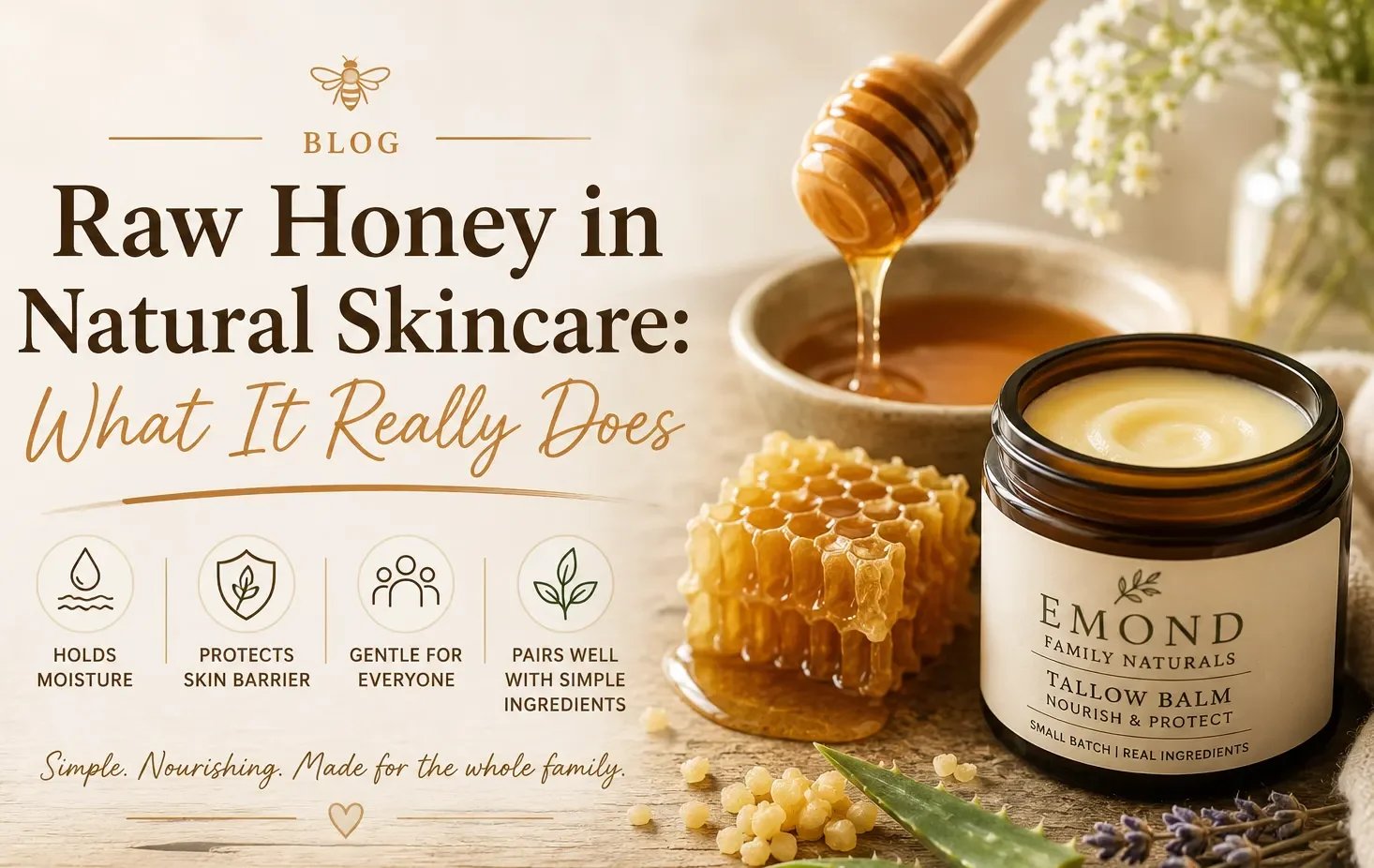
What Raw Honey Actually Does for Your Skin
Raw honey has been trusted in skincare for centuries — and for good reason. Here’s a plain-language look at what it actually does for your skin, and why it’s one of the key ingredients in every balm we make.
Honey has been used on skin for thousands of years. Long before skincare had a shelf at the drugstore, people were reaching for it to soothe irritation, soften dry patches, and protect against the elements. It's one of those ingredients that has genuinely stood the test of time — not because of clever marketing, but because it quietly does what it's supposed to do.
Here's a plain-language look at what raw honey actually brings to the table when it comes to caring for your skin.
It Holds Onto Moisture
One of raw honey's best-known qualities is that it's a humectant — meaning it draws moisture in and holds it there. When applied to skin, it pulls water from the air and keeps it against your skin's surface, helping things stay soft and supple longer than a lot of other ingredients.
This is especially helpful for skin that tends to feel tight or rough. Elbows, knees, heels, the backs of your hands — those spots where skin gets thick and dry — respond really well to moisture-holding ingredients like honey. You don't need a complicated product to get there. Sometimes it's as simple as using something that actually holds onto what your skin needs.
Why "Raw" Matters
Not all honey is the same. Processed honey is typically filtered and heat-treated, which strips away some of its naturally occurring properties. Raw honey keeps more of what nature put in it — enzymes, trace minerals, naturally occurring compounds that work quietly in the background.
When we say raw honey, we mean honey that's close to the source, minimally processed, not refined down into something that barely resembles the original. That's the kind we use in our balms, and we think it makes a difference.
It Protects the Skin's Surface
Raw honey has gentle, protective properties that help support the skin's surface layer. This isn't a clinical claim — it's just the simple reality that honey has been trusted for centuries to help keep skin comfortable and supported because it creates a kind of soft barrier against outside irritants.
That protective quality is one of the reasons honey shows up in so many traditional skin remedies, and why families with sensitive skin often reach for it. It doesn't overpower or overwhelm. It just does its job gently and reliably.
It's Gentle Enough for Everyone
If you've tried to find one product that works for the whole household — babies, teenagers, adults with reactive skin — you know the list is short. Raw honey is one of those rare ingredients that tends to work across the board without causing issues.
It's one of the reasons we include it in all three of our tallow balms. Our goal has always been to make something the entire family can reach for without second-guessing the ingredients list. Raw honey fits that naturally.
It Plays Well With Other Simple Ingredients
Raw honey works best when it's part of a thoughtful combination of nourishing things. In our balms, it pairs with beeswax (which helps seal moisture in), vitamin E oil (rich in antioxidants), aloe vera, and tallow — which closely mirrors the skin's own natural oils. Together, they create something that feels genuinely supportive rather than like you're just layering product on your skin.
Each ingredient earns its place. Nothing's in there to pad a label or chase a trend. A small number of honest ingredients, each doing something real — that's the philosophy behind everything we make.
Our Balms Are a Good Starting Point
At Emond Family Naturals, raw honey is in every tallow balm we make — our Orange Citrus, Lavender Citrus, and Salted Caramel varieties. It's not a marketing highlight, it's just one of the good things inside the jar. And it works alongside everything else in there to make a balm that feels simple, nourishing, and worth keeping around.
If you've been thinking about switching to something cleaner and simpler for your family's skin, our balms are a low-pressure place to start. Small batch, real ingredients, made with care.
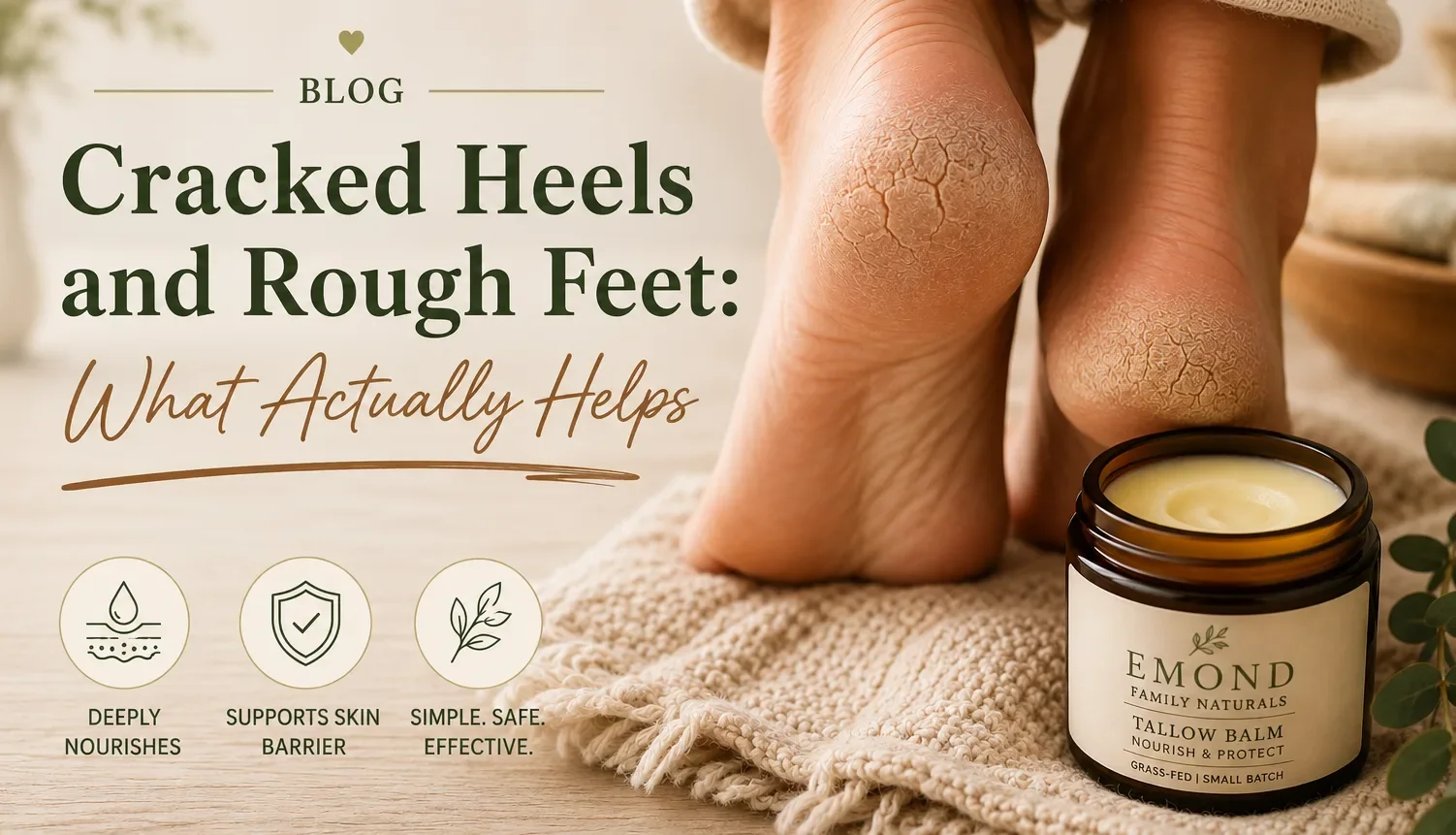
Cracked Heels and Rough Feet: What Actually Helps
Dry, cracked heels are one of the most common skin complaints — and one of the least talked about. Here’s what’s actually going on with the skin on your feet, and what really helps (hint: it’s simpler than you’d think).
If there's one skin complaint that almost everyone deals with at some point, it's dry, cracked heels. They show up quietly — a little roughness here, some tightness there — and before long, the skin on your heels is hard, flaky, and sometimes even painful.
It's easy to feel like cracked heels are just a cosmetic nuisance. But the skin on your feet is actually working hard, and when it gets dry and rough, that's your skin telling you it needs a little more support.
Why Your Feet Get So Dry
The skin on the bottom of your feet is thicker than anywhere else on your body. It's built for pressure and friction — it has to be. But that thickness comes with a trade-off: the skin on your heels has very few oil glands, which means it doesn't produce much of its own moisture.
Without that natural oil, the skin has to rely on what you put on it — and most people don't put much on their feet at all. We moisturize our faces and hands without thinking, but feet tend to get left out.
Add in factors like going barefoot on hard floors, wearing open-backed shoes, or just spending more time on your feet, and the skin loses moisture faster than it can hold onto it. The result: roughness, cracking, and sometimes that uncomfortable tight feeling that makes every step a little less pleasant.
What Most Products Get Wrong
The shelves are full of foot creams promising to fix cracked heels overnight. Most of them lean heavily on water-based lotions that feel nice going on but don't actually stay with the skin very long. Once that moisture evaporates, you're back where you started.
The problem is that water doesn't actually penetrate the outer layers of skin — it mostly sits on the surface until it evaporates. For the deeper, thicker skin on your heels, you need something that can actually get in there and support the skin's ability to hold onto moisture.
That's where fat-based ingredients have a real advantage.
Why Fats Work Better on Dry, Thick Skin
Fats — the right kind of fats — are structurally similar to the oils your skin produces naturally. Your skin recognizes them. Instead of just sitting on top, they can actually absorb and work with the outermost layers of skin to help keep moisture in.
Tallow in particular has a fatty acid profile that's remarkably close to human sebum. It contains oleic acid, stearic acid, and palmitic acid — the same building blocks your skin uses to keep itself soft and supple. When those fatty acids are present in what you apply, your skin has the materials it needs to stay nourished and protected.
Tallow is also naturally rich in fat-soluble vitamins — A, D, E, and K — that support healthy skin function. Vitamin A supports normal cell turnover. Vitamin E helps protect the skin from oxidative stress. Together, these aren't miracle ingredients. They're just good, foundational nutrition for skin that's dry and working overtime.
A Simple Routine for Rough Heels
You don't need a complicated foot care routine. Here's what actually works:
Clean and pat dry. Simple as that — just make sure your feet are clean and not soaking wet when you apply anything.
Apply a small amount of a fat-based balm. A little goes a long way. Warm it between your hands and work it into your heels, focusing on any areas that feel especially rough or tight.
Put on socks and let it work. If you apply before bed and put on a pair of loose cotton socks, you give the ingredients time to absorb without rubbing off on everything. A lot of people notice a real difference within a week of doing this consistently.
Be consistent. Dry heels don't get rough overnight, and they won't soften overnight either. A little attention every day or every other day makes a bigger difference than a big effort once a week.
Simple Support for the Skin You Walk On
Your feet carry you everywhere. They deal with a lot of pressure, friction, and exposure — and they don't ask for much in return. A small, consistent habit of applying something genuinely nourishing can make a noticeable difference in how your heels look and feel.
At Emond Family Naturals, our tallow balms are made with the kinds of ingredients that work well on tough, dry skin — including those stubborn heels. The same small batch balm that's gentle enough for a child's sensitive skin is also nourishing enough to soften the roughest spots on your feet. It's the kind of simple, trustworthy skincare that just makes sense.
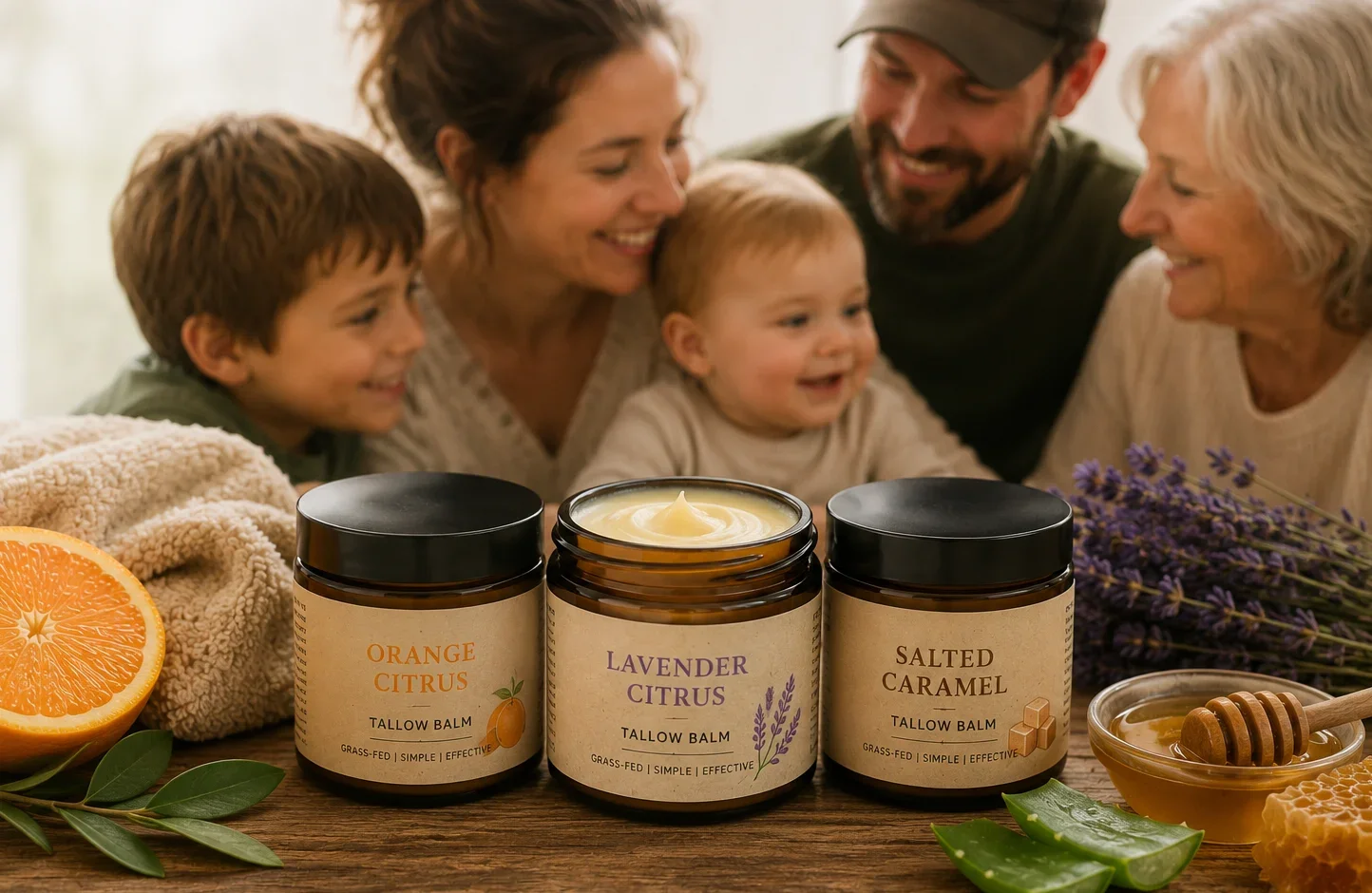
One Product, Whole Family: Why Simple Skincare Works for Everyone
Simple skincare does not have to mean separate products for every person in the house. This post shares why a well-made tallow balm can support moisture, protect against dryness, and fit naturally into routines for little ones, teens, adults, and older skin alike.
There's a moment most parents recognize: standing in the bathroom looking at a counter crowded with different lotions, creams, and balms. One for the baby. One for sensitive skin. One for your partner who gets dry elbows. One for yourself. Each one promising to be exactly right for exactly one person.
But here's something we've found through years of using and making tallow balm: the simplest ingredients often work the best — and they tend to work well for almost everyone.
The Problem With "Personalized" Skincare Products
The skincare industry has done a remarkable job convincing us that every person, every skin type, and every body part needs its own specific product. And while everyone's skin is unique, the truth is that most of us share the same basic needs: moisture, protection, and gentle nourishment.
When you look at what skin actually needs to stay healthy — a stable moisture barrier, some support from vitamins and fatty acids, and protection from dryness — you realize those needs don't change dramatically from person to person. A baby's skin needs protection from dryness. So does grandma's. So does your teenager's. So does yours.
Why Tallow Works Across Skin Types and Ages
Here's what makes tallow so interesting as a skincare ingredient: it's remarkably similar to the oils naturally found in human skin.
Human skin produces something called sebum — a natural oil made up of fatty acids, waxes, and other lipids that helps protect and moisturize your skin. Beef tallow has a fatty acid profile that closely mirrors this. The main fatty acids in tallow — oleic acid, palmitic acid, and stearic acid — are the same ones your skin already knows how to work with.
That means tallow isn't fighting your skin's chemistry. It's working with it.
This is part of why tallow tends to sit nicely on skin without feeling greasy or heavy. It absorbs well because it's familiar to your skin on a molecular level. And it's part of why it tends to work across different skin types — dry, normal, combination — and across different ages.
From Little Ones to Grandparents
We make our tallow balm for families. That's not just a tagline — it's genuinely what we had in mind when we developed these recipes.
For little ones: Babies and toddlers have delicate skin that's easily irritated by synthetic fragrances and harsh preservatives. Our balms are made with simple, recognizable ingredients: grass-fed tallow, beeswax, raw honey, vitamin E oil, and aloe. Nothing synthetic. Parents who use our balm on their own hands often find it gentle enough for their kids too.
For teens: Teenage skin can be all over the place — sometimes oily, sometimes dry, sometimes both at once. A light application of tallow balm can help support the skin barrier without overwhelming skin that's already working overtime.
For adults: Whether you're dealing with dry patches, rough elbows, or just want a simple daily moisturizer, tallow balm fits into your routine without fuss. No 10-step process required.
For older skin: As skin ages, it tends to produce less of its own oil. That's where a nourishing balm really earns its place. The vitamins naturally present in tallow — particularly A, D, E, and K — offer gentle support for skin that needs a little extra care.
Simplifying the Bathroom Counter
One of the things we hear from families who use our balms is that they stop buying so many separate products. One jar that everyone can share. Dad uses it on his dry knuckles. Mom keeps it on the nightstand. The kids use it after bath time.
That's the kind of simplicity we were going for.
It's not about selling you on a miracle product. It's about having something trustworthy, made from honest ingredients, that does what it says — and works for the people you love.
Emond Family Naturals tallow balms come in three scents — Orange Citrus, Lavender Citrus, and Salted Caramel — all made with the same simple base: American-sourced grass-fed beef tallow, yellow beeswax, raw honey, vitamin E oil, and aloe. Made in small batches by a family that uses them ourselves.
If you've been looking for something simple that the whole family can share, that's exactly what we set out to make.
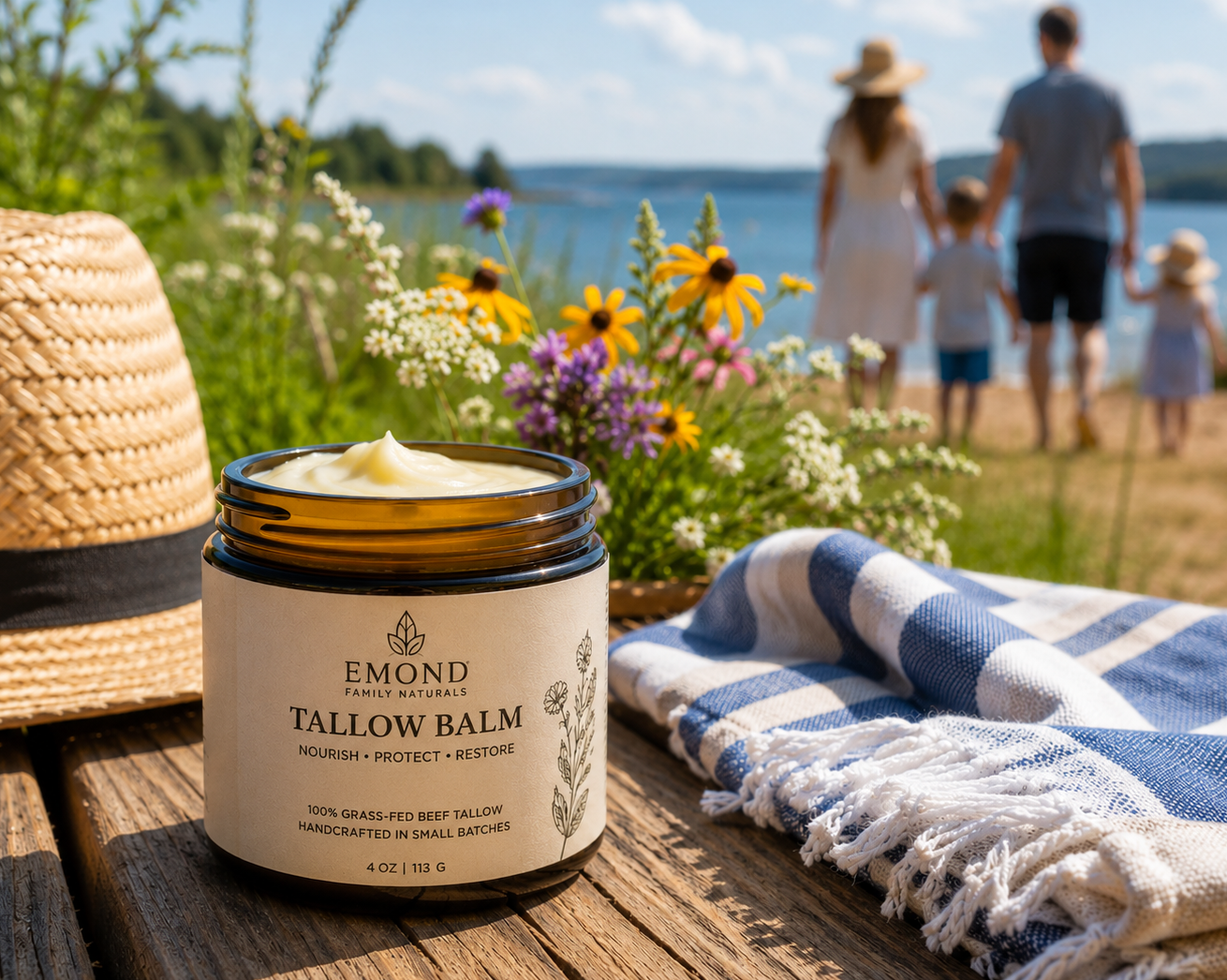
Seasonal Skincare Made Simple: How to Support Your Skin Through Summer
Summer can be tough on your skin. Discover simple ways to maintain moisture, support your skin barrier, and keep your routine easy all season long.
As the seasons change, so do the needs of your skin. Summer often means more time outdoors, more sun exposure, more swimming, and more time in air-conditioned spaces. While these activities are part of what makes summer enjoyable, they can also leave skin feeling dry, tight, or in need of extra moisture.
The good news is that you do not need a complicated routine to care for your skin during the warmer months. A few simple habits can help support healthy-looking skin all season long.
Why Summer Can Affect Your Skin
Many people assume skin only becomes dry during winter, but summer can create its own challenges.
Factors that may affect how your skin feels include:
Spending more time in the sun
Exposure to saltwater or chlorinated pools
Frequent showers after outdoor activities
Air conditioning indoors
Increased hand washing during travel and activities
These everyday factors can contribute to skin that feels less comfortable than usual.
Focus on Maintaining Moisture
One of the simplest ways to support your skin during summer is to maintain moisture consistently.
Rather than waiting until your skin feels dry, try applying a nourishing moisturizer as part of your daily routine. Consistent care can help support your skin barrier and keep skin feeling soft and comfortable.
Simple habits often provide the greatest benefit because they are easy to maintain throughout the season.
Keep Your Routine Minimal
Summer is a great time to simplify.
Instead of adding more products, focus on the basics:
Cleanse Gently
Use a gentle cleanser that removes dirt and sweat without leaving skin feeling stripped.
Moisturize Daily
Apply a moisturizer after washing or showering to help lock in moisture.
Pay Attention to Dry Areas
Hands, elbows, knees, feet, and areas exposed to the elements often benefit from a little extra care.
A minimalist routine can be easier to maintain while traveling, camping, visiting the beach, or enjoying family vacations.
Why Many Families Choose Tallow Balm
Tallow has been used for generations as part of traditional skincare routines. Today, many people appreciate it for its rich texture and simple ingredient profile.
A handcrafted grass-fed tallow balm can help nourish the skin and support moisture without requiring multiple products. Because a small amount goes a long way, it can be an easy addition to a summer skincare routine.
Many families appreciate having one versatile product available for everyday care throughout the season.
Small-Batch Products and Simple Ingredients
When we started Emond Family Naturals, we wanted products that reflected the values we use at home.
That meant focusing on simple ingredients, small-batch production, and products that fit naturally into everyday life. We believe skincare does not need to be complicated to be effective as part of a regular routine.
Sometimes the best approach is simply finding products you enjoy using consistently.
Summer Skincare Tips for the Whole Family
Whether you are caring for your own skin or helping your family build good habits, these simple tips can help:
Keep moisturizer near the sink for easy daily use
Apply moisture after swimming or showering
Bring a small container when traveling
Focus on consistency rather than complexity
Choose products that fit easily into your routine
Simple habits are often the easiest habits to maintain.
A Gentle Approach to Everyday Care
At Emond Family Naturals, we believe skincare should feel approachable, not overwhelming. Our handcrafted, small-batch grass-fed tallow balms are made with simple ingredients and designed to fit naturally into everyday life.
Whether you are spending the day at the beach, working in the garden, or enjoying a family vacation, a simple skincare routine can help keep your skin feeling nourished and comfortable.
Final Thoughts
Summer skincare does not have to involve a shelf full of products. By focusing on gentle cleansing, consistent moisture, and simple everyday care, you can support your skin throughout the season.
Sometimes the most effective routine is the one simple enough to stick with every day. Explore the handcrafted grass-fed tallow balms from Emond Family Naturals and discover how simple ingredients can become part of your everyday skincare routine.
What Supporting Your Skin Barrier Really Means
The phrase “skin barrier support” is everywhere in skincare today, but what does it actually mean? Here’s a simple explanation of your skin barrier, why it matters, and how gentle daily habits can help maintain healthy, balanced skin.
If you have spent any time reading about skincare recently, you have probably come across the phrase skin barrier support. It sounds important, but it can also feel a little confusing. What exactly is your skin barrier? And what does it mean to support it?
The good news is that the concept is much simpler than it sounds. At its core, your skin barrier helps maintain moisture, protect against everyday environmental stressors, and keep your skin feeling balanced and comfortable. When it is supported well, skin often feels smoother, calmer, and more resilient to the ups and downs of daily life.
What Is Your Skin Barrier?
Think of your skin barrier as your skin’s outer protective layer. Its job is to help keep moisture in while helping shield your skin from things like dry air, changing weather, and everyday environmental exposure. Your skin barrier is working around the clock, often without you ever noticing it.
When it is functioning well, your skin typically feels comfortable, hydrated, and balanced. When it becomes overwhelmed, you may notice dryness, tightness, or a feeling that your skin is simply not as comfortable as usual.
Why Moisture Balance Matters
One of the most important roles of your skin barrier is helping maintain moisture balance. Healthy skin relies on both hydration and moisture support. When those elements work together, skin is better able to stay comfortable throughout the day. This is why many skincare routines focus on supporting moisture rather than constantly adding more products. Sometimes skin does not need a complicated solution. It simply needs consistent support.
More Products Are Not Always Better
One common misconception is that adding more products automatically leads to better results. In reality, constantly layering products or switching routines can sometimes leave skin feeling overwhelmed. This is especially true when routines include frequent exfoliation, multiple active ingredients, or products that are changed every few weeks based on the latest trend. Skincare works best when it feels sustainable. Consistency often provides more benefit than complexity.
A Gentle Approach to Exfoliation
Exfoliation can be a useful part of skincare, but it is easy to overdo it. The goal of exfoliation is to help remove surface buildup—not to leave your skin feeling stripped or uncomfortable. If your skin feels tight, sensitive, or unusually dry after exfoliating, it may be worth considering whether your routine needs a gentler approach. For many people, less frequent exfoliation combined with supportive moisturizing products creates a more balanced experience.
Simple Ways to Support Your Skin Daily
Supporting your skin barrier does not require an elaborate routine.
In fact, many of the most helpful habits are surprisingly simple:
Use a gentle cleanser that does not leave skin feeling stripped
Avoid unnecessary product overload
Maintain consistent hydration
Choose nourishing moisturizers that help support moisture balance
Give your routine time to work before constantly changing products
Small, consistent habits often make the biggest difference over time.
Why We Believe in Simplicity
At Emond Family Naturals, we believe skincare should feel supportive rather than stressful. That is one reason we are drawn to simple, nourishing ingredients and uncomplicated routines. Instead of focusing on dozens of products and constant trend cycles, we prefer skincare that feels approachable, comforting, and easy to maintain.
Because healthy skincare habits are not usually built through complexity. They are built through consistency, balance, and everyday care.
A Simple Approach to Daily Support
Your skin barrier does a lot of work behind the scenes every day. Supporting it does not have to mean overthinking your routine or adding more products to your shelf. Often, the best approach is the simplest one: gentle care, consistent moisture support, and ingredients you feel good about using. If you are looking to simplify your routine, our handcrafted collection is designed around the same philosophy—small-batch skincare made with simple, nourishing ingredients that fit naturally into everyday life.
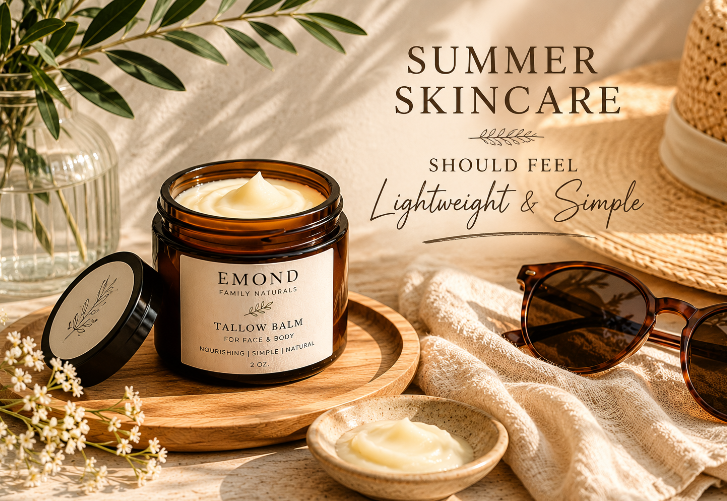
Summer Skincare Should Feel Lightweight and Simple
Summer skincare does not need to be complicated. As temperatures rise, many people benefit from simplifying their routines, avoiding heavy layering, and focusing on lightweight hydration that keeps skin feeling balanced and comfortable.
As the seasons change, skincare routines often need to shift too.
What feels nourishing during colder months can sometimes start feeling too heavy during the summer. Warmer temperatures, humidity, sweat, sunscreen, and more time outdoors all affect the way your skin behaves throughout the day.
That is why summer skincare often works best when it feels lighter, simpler, and easier to maintain consistently.
At Emond Family Naturals, we believe seasonal skincare should support your skin—not overwhelm it.
Your Skin’s Needs Can Change in Warmer Weather
During the summer, skin is exposed to different environmental conditions than it is during colder seasons.
Heat and humidity can naturally increase oil production for some people, while sun exposure, air conditioning, swimming, and frequent cleansing can leave others feeling unexpectedly dry or dehydrated.
This is one reason skincare routines do not always need to stay exactly the same year-round.
Sometimes the healthiest thing you can do is simplify.
More Layers Are Not Always Better
One common mistake during the summer is over-layering products.
When routines include too many serums, thick creams, and heavy products, skin can sometimes start feeling congested, greasy, or uncomfortable—especially in humid weather.
That does not mean skin needs less support. It simply means balance matters.
Many people find that lighter routines feel more comfortable during the summer:
gentle cleansing
lightweight hydration
supportive moisture
fewer unnecessary steps
Simple routines are often easier to maintain consistently during busy summer schedules too.
Hydration Still Matters in the Summer
One of the biggest misconceptions about summer skincare is that hydration becomes less important once the weather warms up.
In reality, skin can still become dehydrated during the summer from:
sun exposure
heat
sweating
swimming
air conditioning
frequent washing
Sometimes skin feels oily and dehydrated at the same time.
That is why hydration support should still remain part of a summer routine—even if the textures you reach for become lighter and more breathable.
Choosing Comfortable, Supportive Textures
Summer skincare often feels best when products absorb comfortably and leave skin feeling balanced rather than heavy.
For some people, that means lighter daytime layers and richer moisture support only in the evening. Others may prefer simple multi-purpose products that reduce the need for excessive layering altogether.
The goal is not to chase perfectly matte or perfectly dewy skin.
It is to create routines that feel comfortable, supportive, and sustainable throughout the season.
Why Simpler Routines Often Work Best in Summer
Summer is usually a busier season.
Travel, outdoor activities, changing schedules, and longer days can make complicated skincare routines harder to maintain consistently. That is one reason simpler routines often work so well this time of year.
A few dependable products used consistently usually feel more supportive than constantly changing routines or layering too many trends together.
At Emond Family Naturals, we have always believed skincare should feel approachable enough to fit naturally into everyday life.
Not stressful.
Not overwhelming.
Just simple care your skin can rely on.
Letting Your Skin Breathe a Little
Sometimes summer skincare is less about adding more and more about creating space for your skin to feel balanced again.
Lighter layers.
Gentler routines.
Consistent hydration.
Supportive ingredients.
Because skincare does not need to feel complicated to work well—especially during the warmer months.
And often, the simplest summer routines are the ones people come back to year after year.
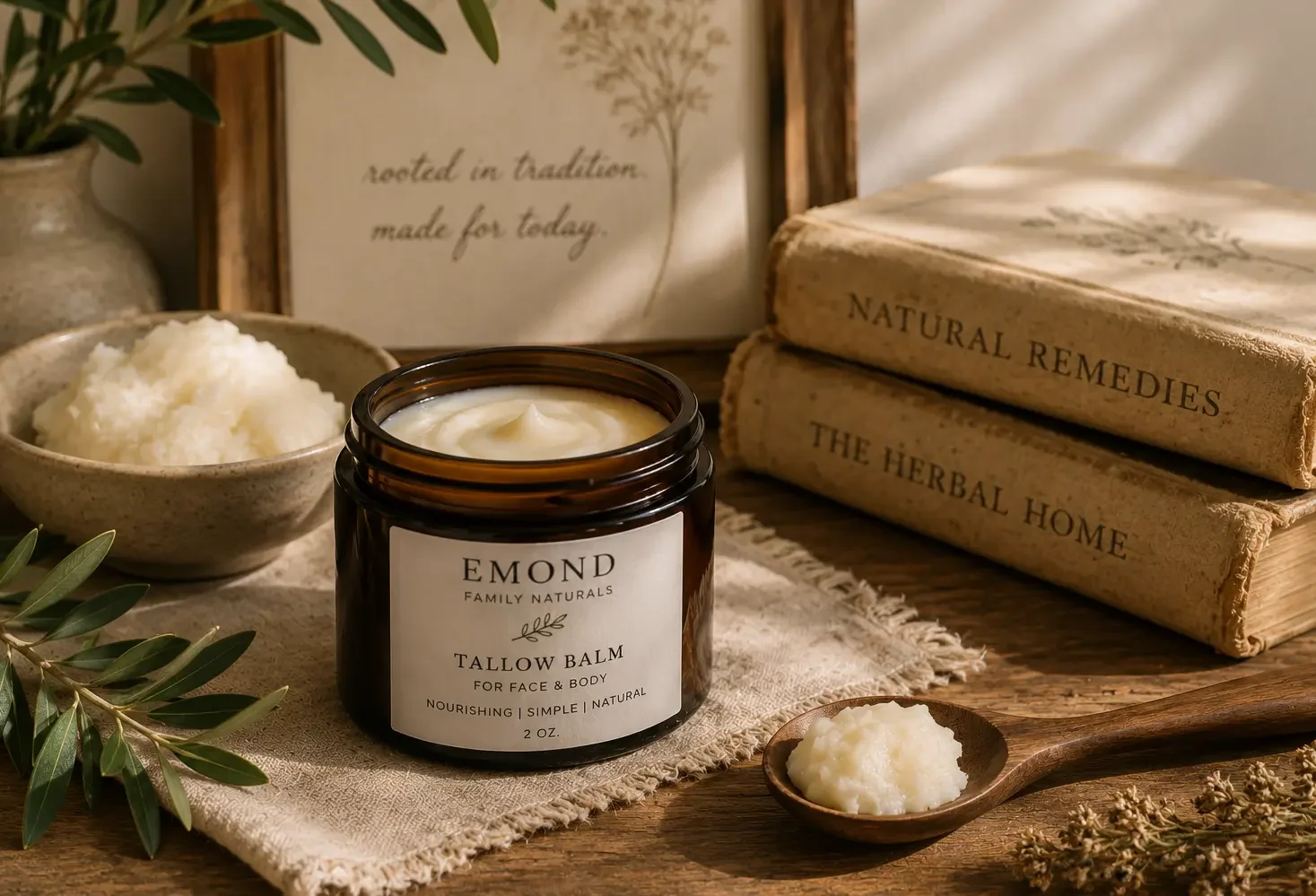
The Return of Traditional Skincare Ingredients
Long before complicated skincare routines and overflowing product shelves, people relied on simple, nourishing ingredients passed down through generations. Here’s why traditional skincare ingredients are finding their way back into modern routines.
Skincare trends change constantly.
One season it is a new active ingredient. The next, it is another complicated routine promising dramatic results. Yet despite how quickly the skincare world evolves, many people are finding themselves drawn back to something simpler: traditional ingredients that have been used for generations.
Not because they are trendy. Because they lasted.
At Emond Family Naturals, we have always appreciated the simplicity and familiarity of old-world skincare. There is something grounding about ingredients that have quietly remained part of everyday routines long before skincare became complicated.
Simplicity Has Always Had Value
For generations, skincare was much simpler than it is today.
People relied on a handful of trusted ingredients to cleanse, moisturize, and protect their skin. Routines were practical, consistent, and rooted in everyday care rather than endless experimentation. There were no 10-step routines or constantly changing product shelves. And while modern skincare has certainly introduced useful innovations, many people are realizing that simpler routines often feel more sustainable and supportive long-term.
Why Traditional Ingredients Continue to Last
Ingredients that remain popular for decades—or even centuries—usually do so for a reason.
Traditional skincare ingredients tend to offer something people continue coming back to:
familiarity
comfort
simplicity
nourishment
dependable routines
They often feel less overwhelming than highly complicated formulations filled with unfamiliar ingredients and constant trend cycles. That does not mean old-world skincare is about rejecting modern skincare entirely. It is more about returning to balance and choosing products that feel approachable and consistent.
The Comfort of Familiar Skincare
There is also an emotional side to traditional skincare that people connect with. Simple textures. Warm routines. Ingredients that feel recognizable instead of overly clinical. For many people, skincare feels more calming when it becomes less complicated. A simple balm, a nourishing moisturizer, or a straightforward evening routine can create a sense of familiarity that complicated routines sometimes lose. That experience matters.
Skincare should not feel intimidating. It should feel supportive.
Why We Still Love Rich, Nourishing Ingredients
At Emond Family Naturals, we are naturally drawn to traditional ingredients because they align with the kind of skincare we believe in: simple, comforting, and intentionally made. Rich balm textures, small-batch products, and uncomplicated routines encourage people to slow down and care for their skin consistently rather than constantly searching for the next trend. Sometimes the ingredients that remain part of skincare traditions for generations are the ones worth paying attention to most.
Not because they are flashy. Because they are dependable.
Modern Skincare Does Not Need to Feel Complicated
One of the reasons traditional ingredients are becoming more popular again is because people are tired of feeling overwhelmed by skincare. Too many products. Too many steps. Too many conflicting opinions. Simple routines built around supportive ingredients often feel easier to maintain and more enjoyable to come back to every day. And in many cases, consistency matters more than complexity.
Returning to What Feels Timeless
Trends will continue to come and go. But skincare rooted in simplicity, comfort, and intentional care tends to last much longer. That is why traditional ingredients continue finding their way back into modern routines—not because they are new, but because they never stopped being meaningful in the first place. And sometimes, the most timeless skincare habits are also the simplest ones. Whether your routine is simple or detailed, the goal is the same: skincare that feels supportive, comforting, and easy to return to every day.
At Emond Family Naturals, we believe in small-batch skincare made with simple, nourishing ingredients inspired by traditional care routines that have stood the test of time. If you are looking to simplify your routine and bring a little more balance back to your skincare, we would love for you to explore our handcrafted collection.
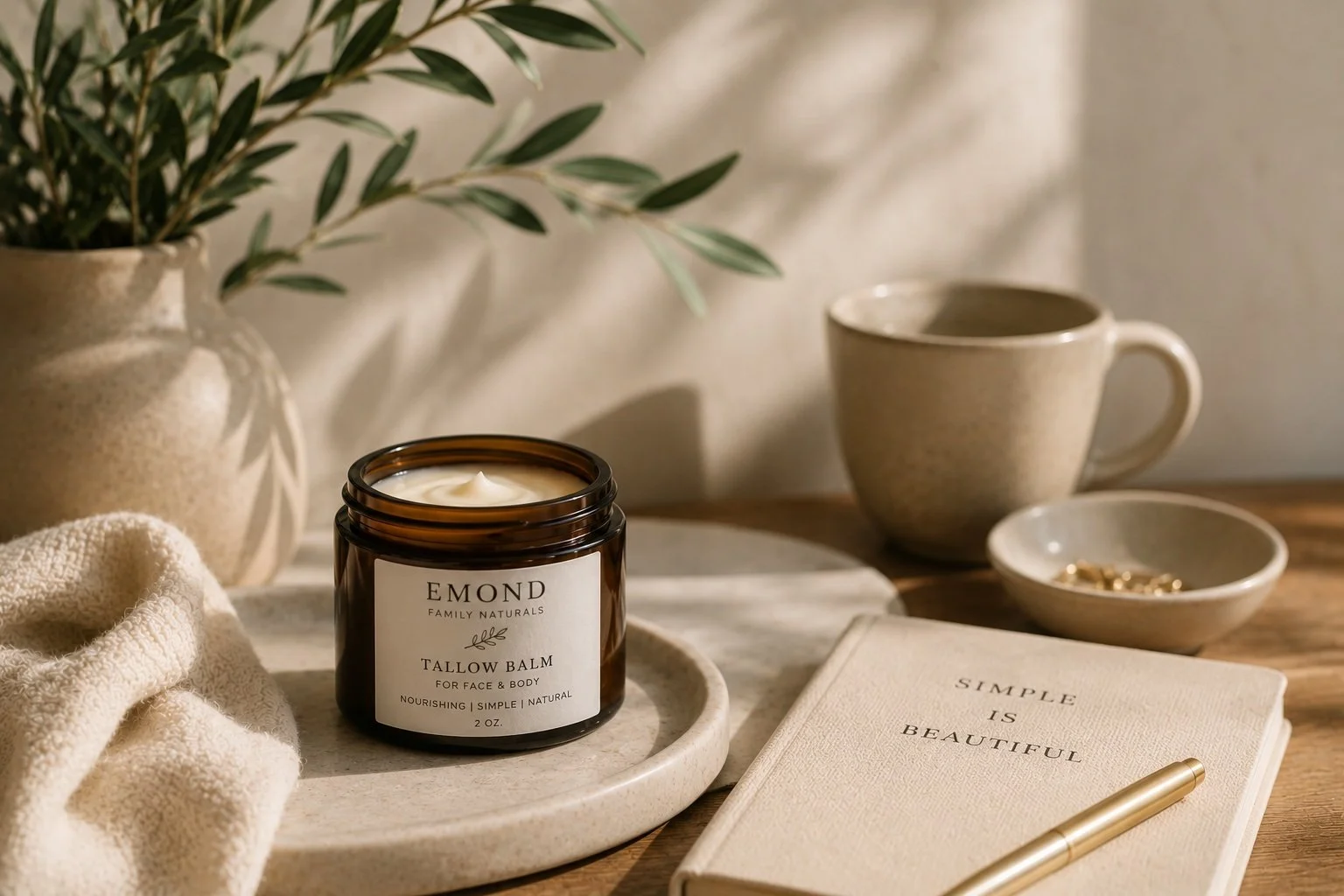
Why We Don’t Believe in 10-Step Skincare Routines
Between endless skincare trends and overflowing product shelves, routines can start to feel more stressful than helpful. Here’s why we believe consistency, simplicity, and supportive ingredients matter more than a 10-step routine.
At some point, skincare stopped feeling simple. Everywhere you look, there seems to be a new trend, a new “must-have” ingredient, or another product being added to an already crowded routine. What started as self-care can quickly turn into something overwhelming. And for many people, that kind of routine simply is not sustainable. At Emond Family Naturals, we believe skincare should feel supportive, calming, and realistic enough to maintain consistently—not like another complicated task at the end of the day.
More Products Do Not Always Mean Better Skin
The skincare industry often encourages the idea that more is better: more serums, more treatments, more exfoliation, more steps. But skin is not always asking for more. In fact, constantly layering products or switching routines can sometimes leave skin feeling stressed, unbalanced, or difficult to manage. Simple routines tend to remove the guesswork. They allow you to pay closer attention to how your skin actually feels instead of constantly chasing the next trend.
Skincare Fatigue Is Real
One thing people rarely talk about is how exhausting skincare can become.
When routines involve too many products, too many instructions, and too many expectations, consistency becomes harder. Products get abandoned halfway through. Routines become inconsistent. Skincare starts feeling more frustrating than enjoyable. That is often where “skincare fatigue” begins. A sustainable routine should feel approachable enough that you can continue it long-term—not just for a few weeks after buying a new set of products.
Consistency Matters More Than Complexity
One of the healthiest things you can do for your skin is give it consistency. A gentle cleanser, supportive moisture, and simple ingredients used regularly often go further than constantly changing routines based on trends or social media recommendations. Skin usually responds best when it feels supported rather than overwhelmed. That does not mean every product needs to be stripped down to the basics. It simply means routines should feel intentional instead of excessive.
Trends Move Fast. Healthy Habits Last Longer.
Skincare trends come and go quickly.
One month it is layering acids. The next month it is “glass skin,” overnight masks, or complicated ingredient combinations. While some trends can be helpful, constantly trying to keep up can make skincare feel stressful instead of grounding. We believe healthy skincare habits should be sustainable.
That means:
routines you can realistically maintain
products you genuinely enjoy using
ingredients that feel supportive and familiar
skincare that fits naturally into everyday life
Not routines that require an entire shelf and an hour in front of the mirror.
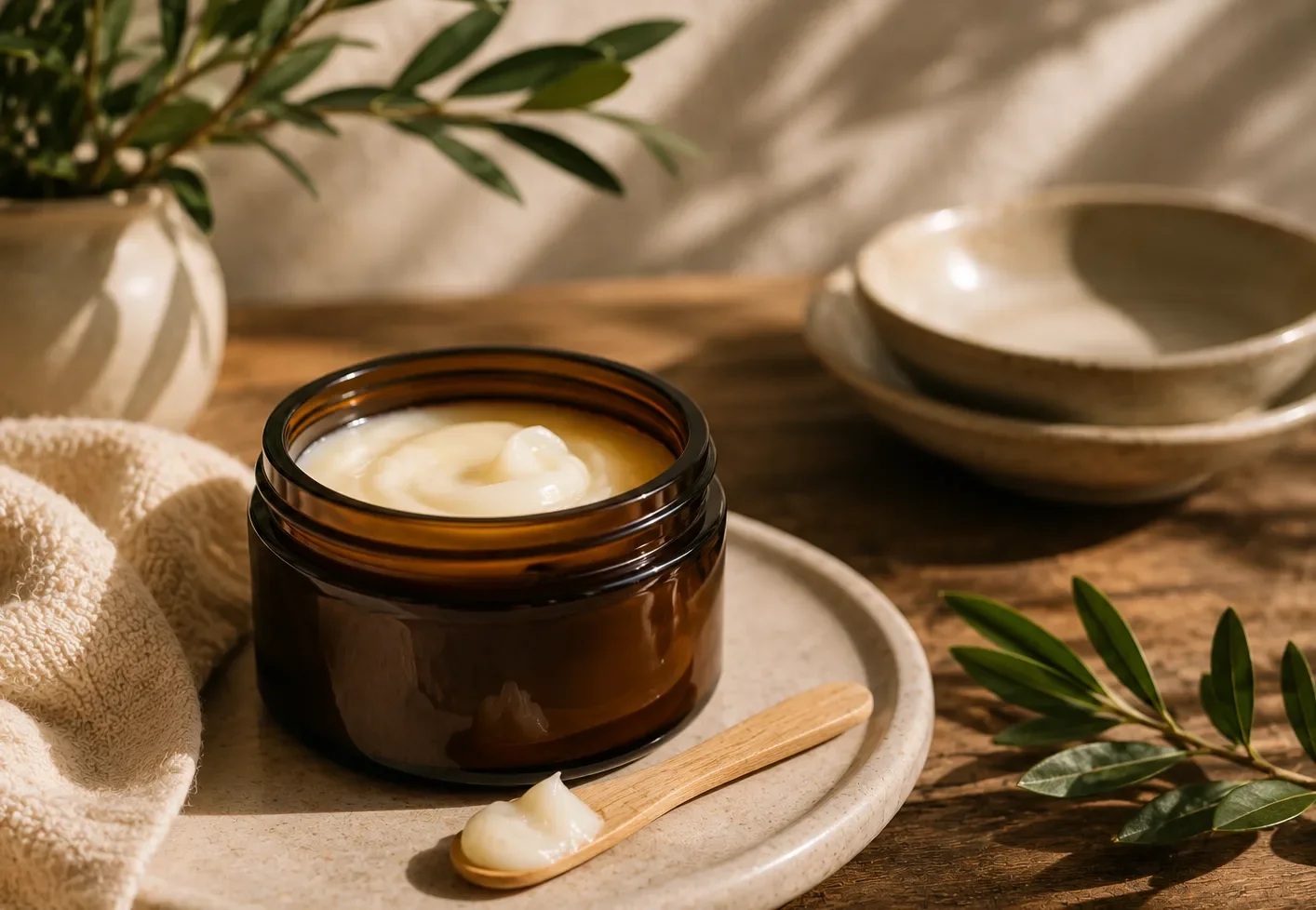
Why Texture Matters More Than People Think in Skincare
Skincare is not only about ingredients—it is also about experience. From rich balms to lightweight lotions, texture plays a major role in how products feel, absorb, and fit into your daily routine.
When most people shop for skincare, they focus on ingredients first. While ingredients certainly matter, there is another part of skincare that often gets overlooked: texture. The way a product feels on your skin can completely change how often you use it, how comforting it feels, and how your routine fits into everyday life. Because skincare is not just functional—it is sensory too.
The Experience of Skincare Matters
Some products feel cooling and lightweight. Others feel rich, velvety, and deeply nourishing. Neither is automatically better. It depends on what your skin needs and what feels most supportive to you. Texture influences more than comfort. It also shapes the overall experience of your routine. A product that feels calming and enjoyable is often one you are more likely to use consistently. And consistency usually matters more than chasing the newest trend.
Rich vs. Lightweight Moisturizers
Lightweight moisturizers are often popular because they absorb quickly and feel barely noticeable on the skin. They can work especially well during warmer months or for people who prefer a minimal feel. Rich moisturizers and balms offer a different experience. Instead of disappearing instantly, they create a more comforting layer that helps skin feel protected and nourished. Many people naturally reach for richer textures during colder seasons, dry weather, or evening routines when skin needs extra moisture support. It is less about choosing the “best” texture and more about finding what feels balanced for your skin and lifestyle.
Why Balm Textures Feel So Comforting
There is something uniquely calming about balm-style skincare. The texture feels intentional. Slower. More grounding. Unlike products that evaporate quickly or feel overly thin, a balm encourages you to slow down and massage the product into your skin more thoughtfully. That experience alone can change the way a routine feels. At Emond Family Naturals, we have always appreciated richer textures because they create a sense of comfort while supporting long-lasting moisture at the same time. Simple routines should still feel enjoyable.
Skincare Is More Sensory Than We Realize
Texture, scent, warmth, and even the ritual of applying skincare all contribute to the experience. That is one reason overly complicated routines can sometimes feel exhausting instead of supportive. When every product has a different texture, active ingredient, or complicated instruction, skincare can start feeling more stressful than calming. Simple, sensory routines often create the opposite feeling. They feel familiar. Relaxing. Comfortable. And for many people, that emotional connection becomes part of why they continue coming back to certain products and routines over time.
Finding the Texture That Works for You
Some people love lightweight hydration during the day and richer balms at night. Others prefer nourishing textures year-round. There is no single correct approach. The most important thing is paying attention to how your skin feels—not just immediately after applying a product, but throughout the day. Comfort matters. And sometimes the products we trust most are not just the ones that “work,” but the ones that make skincare feel simple, calming, and consistent.
Dry Skin vs. Dehydrated Skin: What’s the Difference?
Many people use the terms “dry skin” and “dehydrated skin” interchangeably, but they are actually very different. Understanding the difference can help you choose products and routines that truly support balanced, comfortable skin.
Many people use the terms “dry skin” and “dehydrated skin” interchangeably, but they are not the same thing. Understanding the difference is important because each one needs a slightly different kind of support.
If your skin often feels tight, rough, dull, or uncomfortable, your routine may be missing something your skin actually needs. The good news is that supporting healthy, balanced skin usually does not require an overflowing shelf of products. In many cases, simplicity makes the biggest difference.
Dry Skin and Dehydrated Skin Are Different
Dry skin is considered a skin type. It usually means your skin naturally produces less oil, also known as sebum. Because of this, dry skin may feel flaky, rough, or tight more consistently, especially during colder months or in dry climates. Dehydrated skin, on the other hand, is a skin condition. It happens when your skin lacks water rather than oil. Even oily or combination skin can become dehydrated. This is why skin can sometimes feel both oily and tight at the same time. Environmental stress, over-cleansing, harsh ingredients, and over-exfoliation can all contribute to dehydration, even when someone is using multiple skincare products regularly.
Oil and Water Both Matter
Healthy skin relies on both oil and water to feel balanced. Water helps keep skin looking smooth, refreshed, and hydrated. Oil helps support the skin barrier and seal in that hydration. When one is missing, skin can start to feel uncomfortable. If your routine focuses only on oils without enough hydration support, skin may still feel dull or tight. If you focus only on lightweight hydration without supporting the skin barrier, moisture may evaporate too quickly.
The goal is balance—not excess.
Why Some Skincare Routines Still Feel Drying
One of the most common mistakes in skincare is assuming that more products automatically mean better results. In reality, overcomplicated routines can sometimes leave skin feeling more stressed than supported.
A few common reasons your routine may still feel drying:
Cleansers that strip natural oils
Over-exfoliating too frequently
Strong fragrances or alcohol-heavy products
Constantly switching products
Not using enough nourishing moisture support
Sometimes the healthiest thing for your skin is simplifying your routine and giving it consistency.
Supporting Healthy, Balanced Skin Simply
At Emond Family Naturals, we believe skincare should feel supportive, not overwhelming. That is why we prefer simple, nourishing ingredients that work with your skin instead of constantly trying to force dramatic changes.
A balanced routine often looks like:
Gentle cleansing
Consistent hydration
Moisture support that helps skin feel comfortable
Fewer, higher-quality ingredients
Traditional ingredients like grass-fed tallow are especially valued for their rich, nourishing texture and their ability to support long-lasting moisture without requiring complicated routines.
Simplicity Often Works Best
When skin feels dry, dehydrated, or unbalanced, the answer is not always adding more products. Sometimes it is about removing the unnecessary steps and focusing on what your skin actually needs. Consistency, hydration, nourishment, and simple routines often go further than constantly chasing the newest skincare trend. Because healthy skincare does not need to feel complicated to be effective.
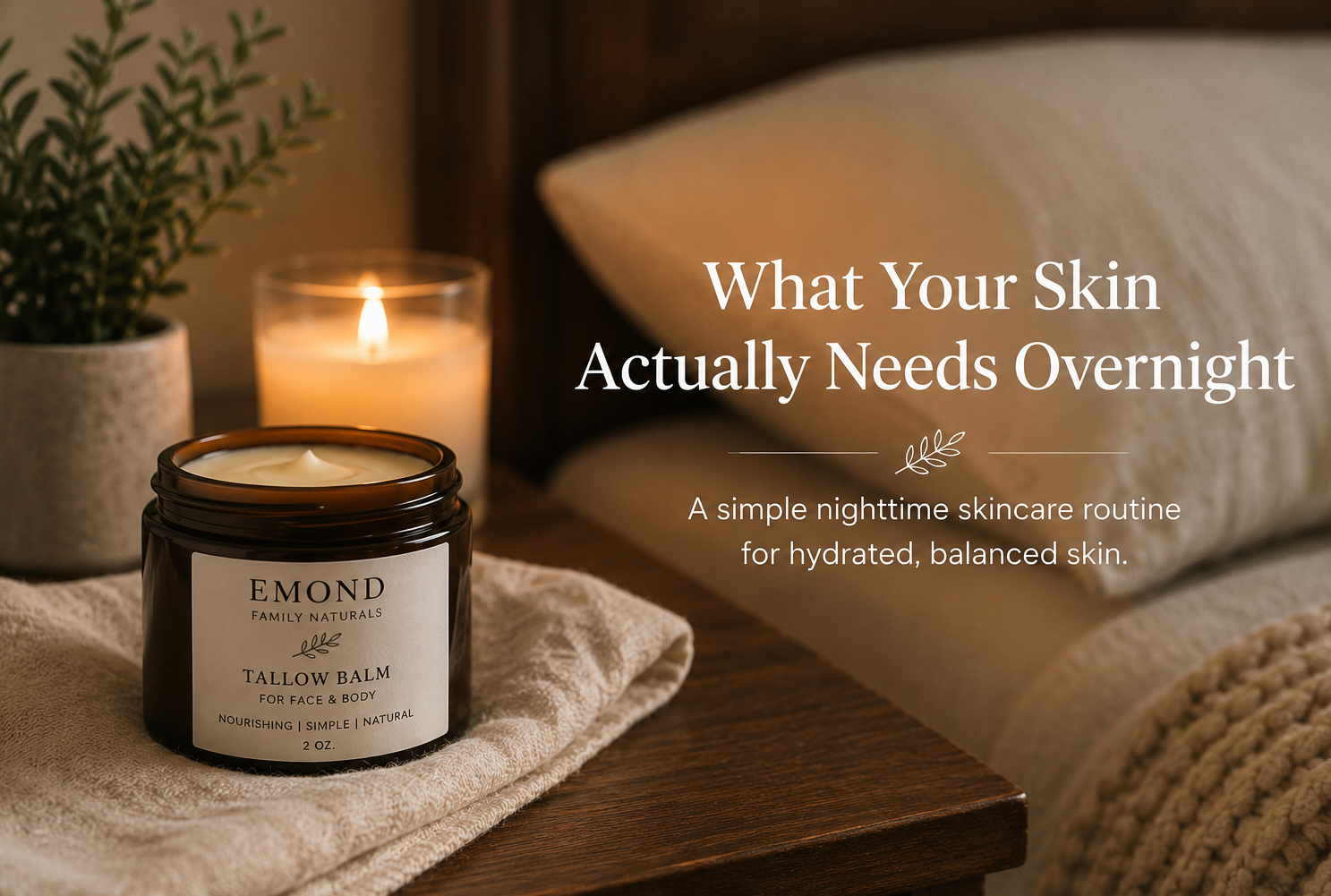
What Your Skin Actually Needs Overnight
A simple nighttime skincare routine can do more for your skin than an overflowing shelf of products. Here’s why your skin needs extra support overnight—and how to keep your evening routine simple, calming, and effective.
During the day, your skin is constantly exposed to the world around you—sun, dry air, makeup, sweat, changing temperatures, and everything in between. By the time evening comes around, your skin is ready for something simple: support. That’s one reason nighttime skincare matters so much. While you sleep, your skin naturally loses moisture more easily. This is also when many people notice tightness, dryness, or dullness the most. The good news is that your nighttime routine does not need to be complicated to be effective. In fact, simpler is often better.
Your Skin Does Its Best Work at Night
Nighttime is when your skin shifts into recovery mode. Without constant exposure to environmental stressors, your skin can focus on maintaining balance and replenishing moisture. That doesn’t mean you need a shelf full of products. For most people, a simple nighttime routine can make a bigger difference than layering multiple treatments that leave skin feeling overwhelmed. A gentle cleanse, consistent hydration, and supportive ingredients are often enough.
Why Skin Often Feels Drier Overnight
One thing many people do not realize is that skin naturally loses water while you sleep. If your routine is too harsh—or missing enough moisture support—you may wake up feeling dry or tight even after applying products before bed. This is where richer, more nourishing moisturizers can help. Unlike lightweight lotions that sometimes disappear quickly, balm-style moisturizers help create a protective layer that supports long-lasting hydration overnight. The goal is not to make skin feel heavy. It is to help it feel comfortable and balanced by morning.
A Simple Nighttime Routine That Works
You do not need a 10-step process before bed. A simple routine is often easier to stay consistent with—and consistency matters more than complexity.
Here is a simple approach:
1. Cleanse Gently
Remove makeup, sunscreen, and buildup from the day without stripping your skin completely dry.
2. Apply Moisture While Skin Is Slightly Damp
This helps lock in hydration more effectively.
3. Use a Nourishing Balm or Moisturizer
Look for simple ingredients that support your skin barrier and provide lasting moisture through the night.
That’s it.
Why We Prefer Simple Ingredients at Night
At Emond Family Naturals, we believe nighttime skincare should feel calming, not overwhelming. That is one reason we love traditional ingredients like grass-fed tallow. Its rich texture and nourishing fatty acids make it especially comforting as part of an evening routine, especially during dry seasons or after long days outdoors. Simple ingredients also mean less layering, less guesswork, and a routine that feels easier to maintain consistently.
Skincare Should Feel Comforting
At the end of the day, skincare does not need to feel complicated to be meaningful. A simple evening routine can become a small moment to slow down, reset, and support your skin with ingredients you trust. No complicated systems. No overflowing countertops. Just consistent care, simple ingredients, and routines that feel good to come back to every night.
The Biological Mirror: Why Your Skin Craves Tallow Instead of Chemical Lotions
Tallow works differently than many synthetic lotions because your skin already recognizes and responds well to it naturally. Here’s why simple ingredients matter more than ever.
When we first started paying closer attention to skincare ingredients, one thing became obvious pretty quickly—most products felt far more complicated than they needed to be.
Long ingredient lists. Synthetic fragrances. Fillers we couldn’t pronounce. Products that promised everything but somehow still left skin feeling dry or irritated.
That’s what originally led us toward tallow skincare.
And the more we learned about it, the more it made sense.
Your Skin Already Knows What to Do With Tallow
Here’s something most people don’t realize:
Your skin naturally produces oils designed to protect and nourish itself. These oils are part of what keeps your skin balanced, hydrated, and resilient throughout the day.
What makes tallow so unique is how closely its fatty acid profile resembles the oils your skin already creates naturally.
In other words, your skin recognizes it.
That’s one of the reasons tallow tends to absorb so differently compared to many synthetic lotions. Instead of sitting heavily on the surface, it works more in harmony with your skin’s natural barrier.
Why Some Chemical Lotions Feel Temporary
A lot of conventional lotions are designed to create the feeling of hydration quickly—but not always long-term nourishment.
Many rely on:
Synthetic fragrances
Alcohol-based ingredients
Preservatives and stabilizers
Fillers designed mostly for texture or shelf life
And while not every store-bought lotion is “bad,” some formulas can leave skin caught in a cycle of temporary relief without truly supporting balance underneath.
That’s why some people find themselves constantly reapplying lotion throughout the day.
Tallow Supports Instead of Covers
One of the things we appreciate most about tallow is that it focuses less on masking dryness and more on supporting the skin itself.
Because it contains naturally nourishing fats and fat-soluble vitamins, it helps support:
Moisture retention
Skin barrier function
Long-lasting softness
Overall skin comfort
And unlike overly complicated formulas, it does this without needing dozens of ingredients.
Sometimes simple really does work better.
Why We Chose Simple Ingredients
This was important to us from the beginning.
We weren’t interested in creating products packed with unnecessary fillers or overpowering scents. We wanted products that felt clean, nourishing, and realistic for everyday use.
That’s why our balms are made in small batches with intentionally simple ingredients designed to work with your skin—not against it.
Whether someone prefers something refreshing like Orange Citrus, calming like Lavender, or completely unscented and minimal, the goal stays the same: supportive skincare that feels natural and uncomplicated.
A Different Approach to Skincare
Modern skincare can sometimes make it feel like you need an entire shelf full of products just to keep your skin balanced.
But healthy skincare routines often come back to a few simple things:
Consistency
Nourishment
Gentle ingredients
Products your skin actually responds well to
That’s the approach we’ve always believed in.
At the End of the Day
Your skin is already incredibly intelligent. The goal isn’t to overwhelm it—it’s to support it.
For us, tallow skincare represents a return to simple, nourishing ingredients that work in harmony with the body instead of fighting against it.
And sometimes, that simpler approach is exactly what your skin has been asking for all along.
Quality Over Quantity: How to Choose Ingredients That Do the Heavy Lifting
In our last post, we talked about why a minimalist skincare routine is the secret to consistency. But once you’ve committed to a simple 3-step process, the next question becomes: what should actually be inside those bottles?
When you aren’t layering ten different serums, the ingredients in your cleanser and moisturizer have to work harder. Here’s how to spot high-performance ingredients that support skin barrier repair and long-term skin health — without the clutter.
1. Look for Multi-Tasking Ingredients
In a simple skincare routine, you want products that do more with less. Instead of buying three separate serums, look for moisturizers or balms that contain ingredients known for multiple benefits.
Ingredients Worth Prioritizing:
Niacinamide — Helps improve texture, balance oil production, and support a brighter, smoother complexion.
Hyaluronic Acid or Glycerin — Draw moisture into the skin to keep it hydrated without feeling heavy or greasy.
Antioxidants — Ingredients like Vitamin E or Green Tea Extract help protect the skin from everyday environmental stress.
The goal isn’t to overload your skin. It’s to choose ingredients that quietly do their job well.
2. Prioritize Skin Barrier Support
Good skincare isn’t just about immediate results. It’s about helping your skin become stronger and more resilient over time.
If your skin regularly feels:
tight
flaky
irritated
itchy
…your skin barrier may be compromised.
Look for products rich in:
Fatty acids
Ceramides
Nourishing oils and butters
These ingredients help reinforce your skin barrier by sealing in moisture and protecting against outside irritants.
Think of your skin like a brick wall:
your skin cells are the bricks
fatty acids and ceramides are the mortar holding everything together
When that barrier is healthy, your skin simply functions better.
3. Avoid the “Filler” Trap
A lot of skincare marketing focuses on buzzwords. What matters more is ingredient quality and transparency.
Many mass-produced lotions are made mostly of:
water
fillers
synthetic fragrance
That often means you need to use more product to get temporary results.
Small-batch skincare tends to focus on concentrated, functional ingredients instead of bulk fillers. That’s why a small amount of a rich, thoughtfully-made balm can often outperform a large amount of cheap lotion.
At Emond Family Naturals, we believe skincare should nourish your skin — not just sit on top of it.
How to Audit Your Current Skincare Shelf
You don’t need a chemistry degree to improve your routine. Start with these three simple checks:
1. The “Fragrance” Check
If a product smells overwhelmingly perfumed, it could be irritating sensitive skin.
2. The “Squeaky Clean” Myth
If your cleanser leaves your face feeling tight or stripped, it’s likely removing too much of your skin’s natural protection. A gentle, pH-balanced cleanser is usually the better choice.
3. Consistency Over Novelty
Your skin needs time to respond to a routine. Skin cells take roughly 28 days to turn over, so avoid constantly switching products every week.
Simple routines work best when you stick with them.
Less Is More. Better Is Best.
Simplifying your routine isn’t about doing less for your skin. It’s about choosing products that actually support it.
When you focus on high-quality, non-comedogenic ingredients that nourish instead of overwhelm, your skin has the space to function the way it was designed to.
Ready to upgrade your essentials?
Simple Skincare Routines That Actually Work (For Busy People)
A simple, effective skincare routine doesn’t need to be complicated. Here’s an easy 3-step morning and evening routine that actually works for busy people.
If you’ve ever looked up a skincare routine and felt overwhelmed before you even started, you’re not alone.
Ten steps, multiple products, morning and night variations—it can feel like more work than it’s worth.
We started paying attention to this early on because, like most people, we just wanted something that worked without taking up half the morning or evening. The truth is, skincare doesn’t have to be complicated to be effective.
Here’s the thing—simple usually works better
Your skin is already doing a lot on its own. It’s constantly working to protect, repair, and balance itself throughout the day.
When you keep your routine simple and consistent, you’re supporting that natural process instead of overwhelming it. More products don’t always mean better results—especially if they’re not working well together.
For most people, a few intentional steps done consistently will go much further than a long routine that’s hard to stick with.
A Simple 3-Step Morning Routine
The goal in the morning is to refresh your skin and prepare it for the day ahead.
1. Cleanse (Lightly)
You don’t need anything harsh here—just something gentle to remove any buildup from overnight.
2. Moisturize
This helps lock in hydration and keep your skin feeling balanced throughout the day.
3. Protect
Whether it’s a simple balm or a lightweight layer, this step helps shield your skin from daily exposure like weather and dry air.
A Simple 3-Step Evening Routine
At night, the focus shifts to cleaning and restoring.
1. Cleanse (Thoroughly, but gently)
Remove dirt, oil, and anything your skin picked up during the day.
2. Moisturize
Your skin does a lot of its repair work at night, so this step matters more than most people realize.
3. Nourish
This is where slightly richer products can help support your skin while you sleep.
Adjusting for Your Skin Type
Even simple routines can be tailored slightly depending on what your skin needs.
For oily skin
Keep things light and avoid over-cleansing. Stripping your skin too much can actually cause it to produce more oil.
For dry skin
Focus on richer, more nourishing products, especially at night. Consistency is key here.
For sensitive skin
Stick with fewer products and simpler ingredients. The less you introduce at once, the easier it is to keep your skin calm and balanced.
Optional Upgrades (When You Have the Time)
If you want to go a step further, there are a couple of simple additions that can help—without turning your routine into a full-time job.
Masks (1–2 times per week) for a deeper reset
Gentle exfoliation to help remove buildup
Targeted treatments if you have a specific concern
These are optional—not essentials. Your core routine should always come first.
Why We Keep It Simple
This is one of the biggest reasons we focus on simple, intentional formulations. When products are made to work with your skin instead of trying to do everything at once, you don’t need as many steps to see results.
Instead of layering multiple products, we’ve always found that a well-made balm or moisturizer can do more than people expect—especially when it’s designed to support your skin’s natural balance.
That’s exactly the approach we take with our own products. We keep the ingredients simple, the process intentional, and the focus on what your skin actually needs—nothing extra.
At the End of the Day
The best skincare routine is the one you’ll actually stick with.
Keeping things simple, consistent, and intentional gives your skin what it needs—without adding unnecessary steps to your day.
If you’ve been feeling overwhelmed by complicated routines, this is your reminder that it doesn’t have to be that way. Simple really can be enough.
If you’re looking to simplify your routine, you can explore our handcrafted options and find what fits best for your skin.